 By
By
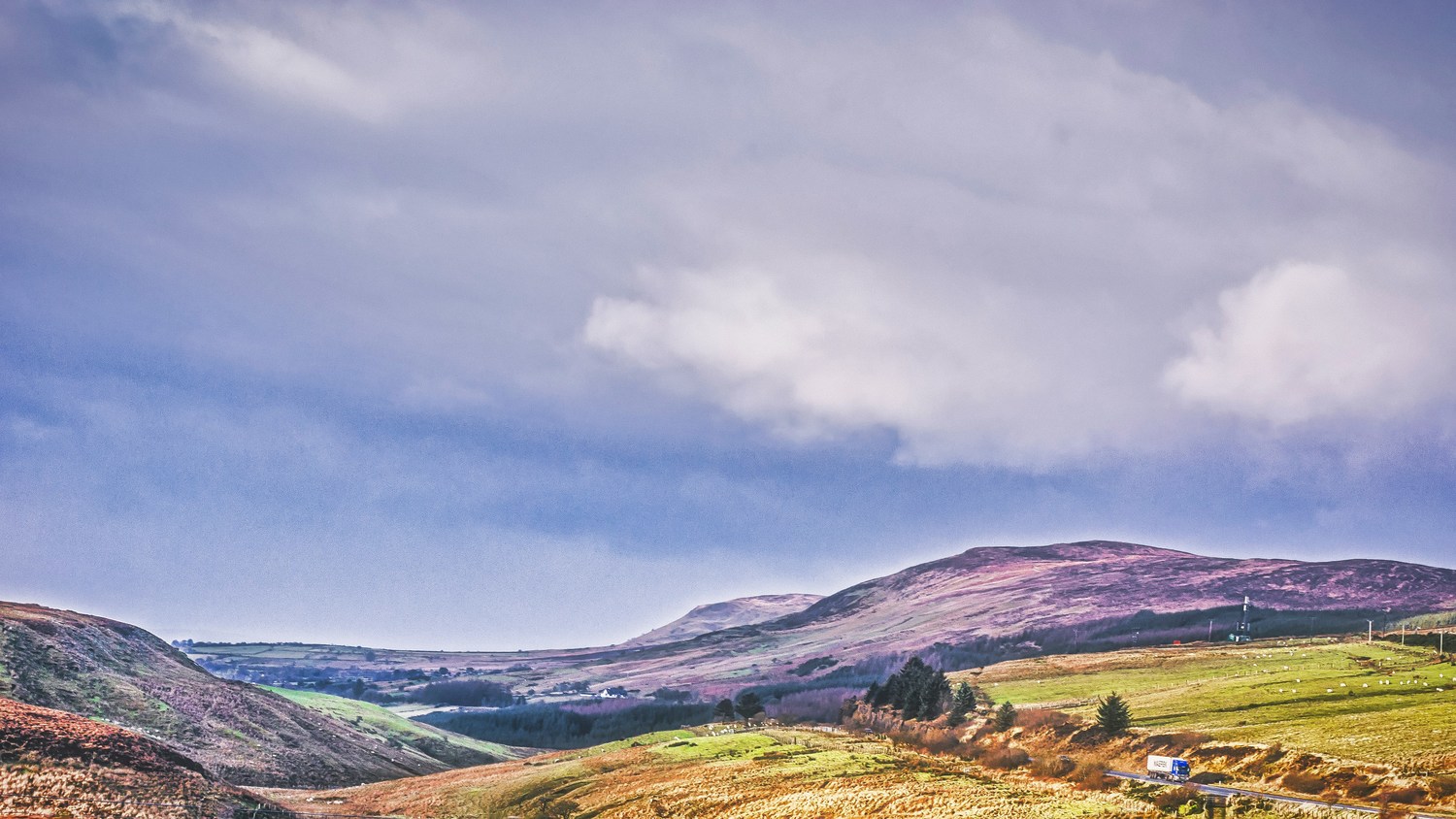
The Sperrin Mountains. Photo by K. Mitch Hodge on Unsplash
Activists, villagers, and a global mining firm clash as a long-running battle over a controversial gold project reaches a pivotal public inquiry stage in Co Tyrone.
====
Villagers who found themselves at the centre of a transatlantic row over the gold beneath their rolling green hills have been going up against a global mining corporation this week.
We look back at week one of a public inquiry into what is the most objected to planning application in the history of Northern Ireland.
Dalradian Gold first arrived from Canada in 2009 in search of gold and other precious metals in the Sperrin Mountains designated Area of Outstanding Natural Beauty.
Concerned citizens began to organise against their plans, and the voluntary campaign group Save Our Sperrins and the Greencastle People’s Office protest site soon followed.
Since then a battle has raged between the mining company and those who say they are determined to protect a Co Tyrone community, its way of life and environment, from industrial extraction.
The activists gathered over 50,000 objections against Dalradian Gold’s 2017 planning application, prompting then-Infrastructure Minister Nichola Mallon to order a public inquiry in 2020.
After false starts in both 2024 and 2025, Dalradian, its supporters, experts and legal teams headed to the Strule Arts Centre in Omagh on Monday to defend the mining application.
They were joined by representatives from various government departments, agencies and Fermanagh and Omagh District Council as well as third-party objectors, who filled half the tables.
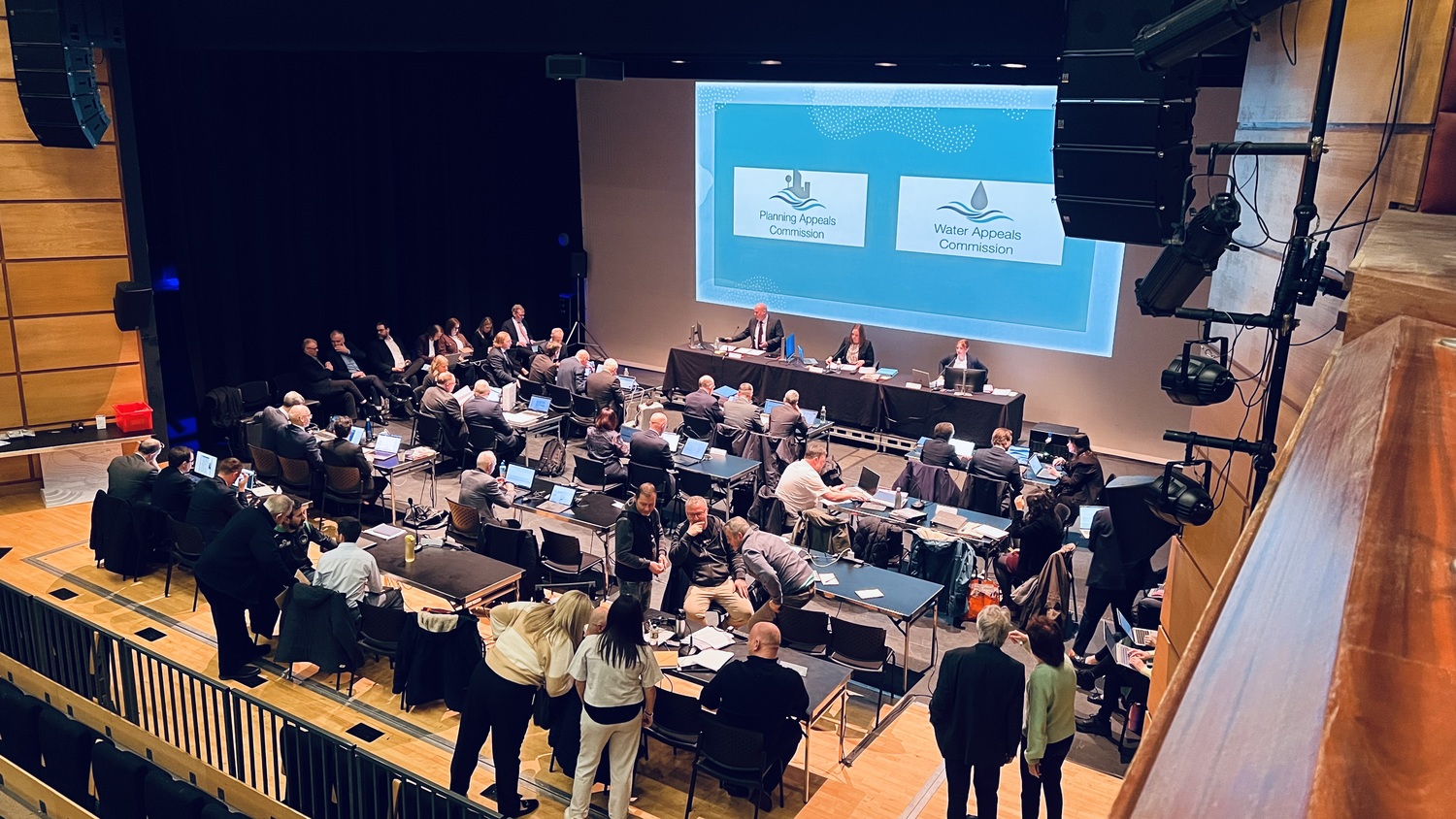
The public inquiry is taking place in Omagh. Photo by Shauna Corr
350 jobs
Dalradian Gold says it has spent around £300 million so far to develop what it terms an environmentally responsible mine in the Sperrins that could create 350 direct jobs.
The firm, now owned by US-based Orion Resource Partners, estimates the minerals it wants to extract are worth around £26 billion. Since the gold and silver buried beneath Northern Ireland belong to the Crown Estate, which funds the British monarchy, it will be paid a small percentage of what they take.
Dalradian says the critical minerals found during exploration could support the UK Industrial Strategy and wider all-island economy.
But it has also found itself in trouble with authorities.
In January 2022, a Stormont committee heard it had recorded six pollution incidents during the prospecting phase — one classed as ‘medium’, resulting in a warning and costs, and five ‘low’.
The proposed mine lies close to the Owenkillew and Owenreagh rivers, habitats for protected species including Atlantic salmon and freshwater pearl mussels.
Dalradian maintains it has “an excellent environmental record” and says there have been “no breaches of water discharge consents or abstraction licences”.
Meanwhile, Fermanagh and Omagh District Council issued enforcement notices against it for failing to return its exploratory Camcosy Road site to its original state when permission lapsed.
Critics argue these pollution and planning breaches, before mining has even begun, are a major cause for concern and raise questions about future conduct.
They have taken messages of dissent to the Crown Estate offices in London, a mining conference in Toronto, Stormont and even PSNI headquarters after a report suggested those opposing the mine were being unfairly policed.
Some anti-mining campaigners have been arrested on suspicion of charges like obstructing a highway and resisting police over actions, while others were allegedly informed by police that they had received credible threats against their lives.
The opponents - who include farmers, teachers, doctors, lawyers, artists and others - say they simply want to protect their townlands from “toxic mining” for future generations.
Support has also come from more unexpected quarters. Actor Kevin McAleer, who played Uncle Colm in Derry Girls, lives just a stone’s throw from the mine and held a fundraiser to support Save Our Sperrins (SOS), while Canadian artist John G. Boehme staged a symbolic ‘dirty protest’ at the site.
SOS has hosted international mining experts, Indigenous representatives with experience of mining disasters, and UN Special Rapporteur on Human Rights Defenders Mary Lawlor, who said she was in “complete awe” of their resilience in protecting the land.
For nearly 3,000 days, campaigners have also kept vigil at a caravan dubbed the Greencastle People’s Office, or GPO.
They say the Sperrins, designated an Area of Outstanding Natural Beauty in 1968, is no place for an industrial site, with crushed waste rock containing heavy metals potentially stacked 17 storeys high on unstable bogland.
Save Our Sperrins fears dust from this ‘dry stack’ could pollute the air, with a primary school and GAA ground within a kilometre of the proposed mine.
It was highlighted during this week’s hearings that the mining company left that very primary school out of its original maps depicting the mine, yet included one over seven miles away.
Their concerns extend beyond air quality. They say local worries range from landslides, water pollution, high electricity demand from the mine, to increased lorry traffic on narrow rural roads that will also pass a primary school.
SOS even wrote to the late Queen requesting that the rights to Northern Ireland’s gold and other precious metals be returned to the public - a request declined by her office.
53 questions
With 53 questions on a range of topics under the headings ‘strategic issues’ and ‘transport & road abandonment’ to be discussed this week, Commissioner Jacqueline McParland got through about half her list - with transport and road issues being pushed back until June.
At times, she appeared frustrated by questions and calls for clarity from third-party public objectors who are not qualified barristers or solicitors, or who don’t speak the legalese often employed during the hearing.
Questions have also been raised about whether this is a truly ‘public’ inquiry, with everything happening behind closed doors in Omagh.
There will be no official record of proceedings; photography, video and recording are banned, nor is it being offered live online, and the community has had to fundraise heavily to be there.
Numerous requests for international experts to address the inquiry over videolink were refused.
Video is allowed in courts across Northern Ireland - but not at the Omagh gold mine inquiry.
SOS chair Marella Fyffe told the Detail: “We had two people with disabilities in there [Monday]. One of them left because for some reason the loop system wasn’t working within the building - but then he couldn't go and watch it at home. Is that fair in this day and age?”

Gold ore in a shed on Dalradian's Camcosy site in 2016. Photo by Shauna Corr
Monday
Issues raised on Monday included the submission of new documents from the Northern Ireland Environment Agency (NIEA) on hydrology, archaeology, climate and cross-border issues and whether the public and Irish government had been given “reasonable time” to review them.
It emerged on day one of the reconvened inquiry that NIEA is not preparing a draft habitat regulation assessment on the mining proposals until after the Planning Appeals Commission completes its report.
Conor Fegan, speaking on behalf of Fermanagh and Omagh District Council, asked if a decision had been made on the acceptability of that and whether the process was fair.
After consideration of the matter overnight, it was accepted that the draft Habitats Regulations Assessments would be completed in time for the Minister to make their decision, despite repeated concerns throughout the week, asking if the Planning Appeals Commission (PAC) should have all that information to hand when writing its report.
It was also suggested that delaying the assessment until after the PAC report could be in contravention of legal conventions that call for information to be made available to the public as soon as possible.
Tuesday
Tuesday’s discussions were largely dominated by the remaining references of cyanide in Dalradian’s planning application, despite assertions they will not be used to separate gold from the ore they mine on site.
Instead, the company plans to mine for many precious metals and process them into a concentrate through a series of tanks using chemicals to retain those metals.
The volumes of chemicals that will still be used also led to serious debate, with the table outlining this described as vague.
Fermanagh and Omagh council’s legal representative, Conor Fegan KC, outlined how they showed “approximate usage” and that “a maximum figure” was what is needed “to ensure that any consent would be set with the reasonable worst-case scenario parameters”.
Ms McParland struggled to make headway on her list of 53 questions, with some participants alleging preferential treatment towards some speakers while “cutting off” others.
NGOs, activists and community campaigners also raised concerns about who was allowed to speak as some groups were advised they could not address the room.
Ongoing changes to Dalradian’s planning application were also raised.
The 2017 planning application has had a number of addendums over the years, but is still being assessed under 2015 planning regulations governing environmental impact assessments.
The Department for Infrastructure (DfI) insisted a Strategic Environmental Assessment is not needed, despite it being considered a regionally significant application that will be assessed by a Minister and not the local planning authority.
On the issue of project splitting, with eight separate applications being submitted for one project, civil society and officials also failed to agree.
Wednesday
Wednesday brought with it concerns that Dalradian has been in breach of planning orders for several years for failing to return its exploratory site at Camcosy Road in Greencastle to its original state.
The inquiry heard how the company had applied for temporary planning permission for the site, which contains an explosives store, and how this was granted without any environmental impact assessments because of the temporary nature of the site.
Fermanagh and Omagh District Council is taking enforcement action over the issue, which Dalradian has appealed to the PAC in a separate case.
The PAC was told it will need to make a decision on whether what has happened around this site constitutes an “unfair advantage” for the company, with Fermanagh and Omagh District Council barrister, Conor Fegan saying they would have to refuse planning for the whole mine if they find this to be the case.
Concerns were raised about a potential conflict of interest involving environmental consulting firm Golders Associates, which has worked for both Dalradian and later the Department for Infrastructure, was also raised on Wednesday.
Golders Associates, which is now part of global engineering and consultancy company WSP, reviewed Dalradian’s mine waste management plan for DfI ahead of the public inquiry.
The company also worked for Dalradian between 2011-2017, on various projects including tailings tests, audits and professional services relating to a waste license exemption.
Commissioner Jacqueline McParland sought opinions from those gathered, leading to calls for submissions on further alleged conflicts involving politicians on both sides of the Atlantic, the PSNI, a DfI director, political advisors, and even the King’s Lord Lieutenant of Tyrone.
The PAC said they would return an answer on Monday on whether further submissions can be made in regards to other perceived conflicts of interest.
The inquiry continues at Strule Arts Centre at 10am on Monday.
With a quarter of Northern Ireland now open to prospectors, the outcome of the case is expected to have long-term implications for the region.
Shauna Corr is an investigative reporter