 By
By
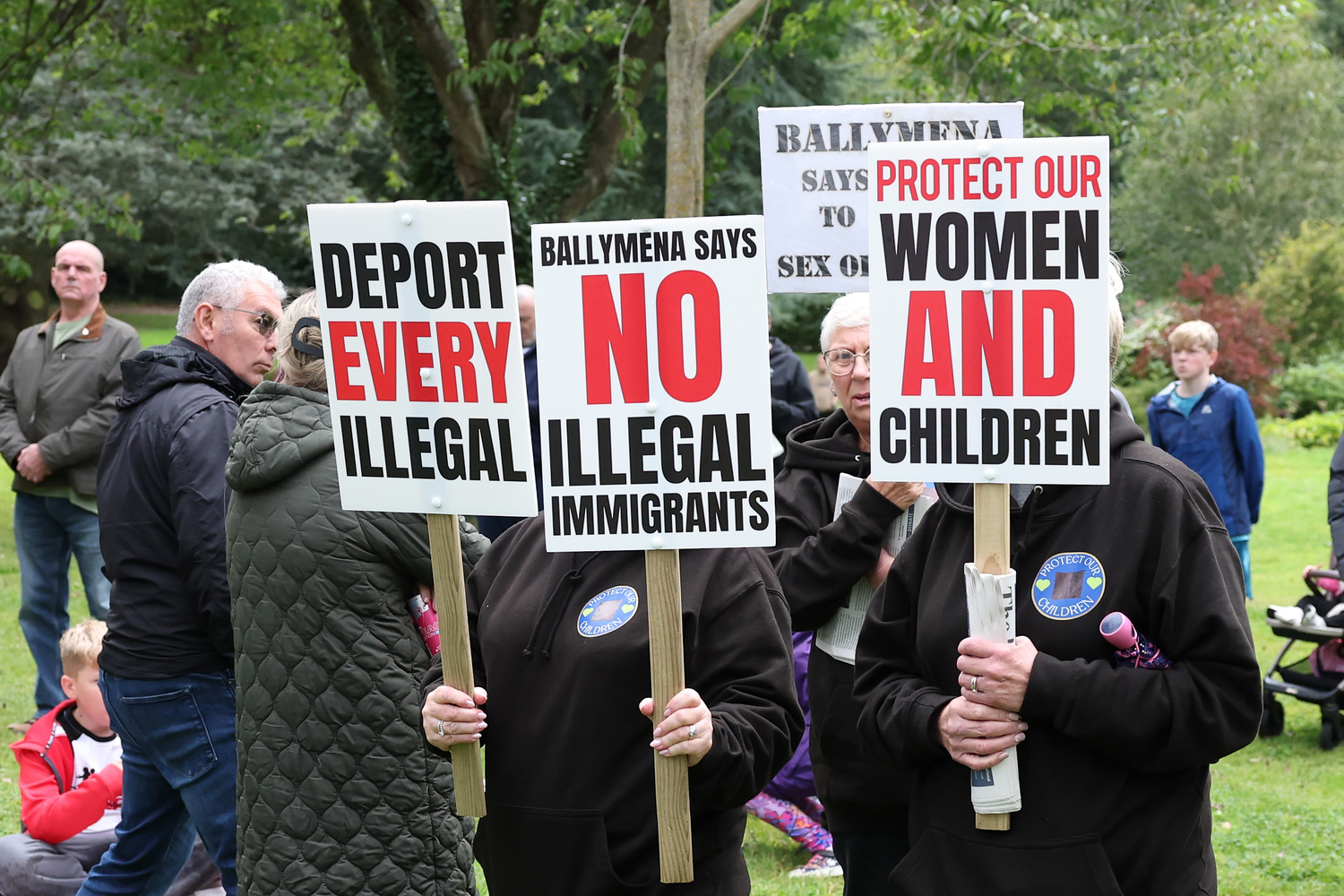
An anti-immigration protest in Belfast, September 2025. Photo by Press Eye
Almost a quarter of those arrested for participating in the racist disorder in Belfast in August 2024 have since been reported to the police for domestic abuse.
PSNI data released under Freedom of Information laws shows that 12 of the 49 people arrested (24.5%) were later reported for domestic abuse.
The Detail previously revealed that almost half of those arrested in connection with the riots had been the subject of a domestic abuse report before their involvement in the disorder.
Further data showed that a third of those arrested during the violent disorder in Ballymena and surrounding towns last summer had also previously been reported to the PSNI for domestic abuse.
Domestic abuse is a widespread societal problem, not confined to any one group of people, and accounted for 20% of all recorded crime in Northern Ireland last year.
Police data shows that perpetrators of domestic abuse in Northern Ireland are overwhelmingly male, over 18, white, British/Irish, and known to the victim.
Calls to protect women and children have been a common feature of anti-migrant protests in Northern Ireland.
However women’s rights groups said this narrative needed to be challenged.
“The myth that violence against women and girls is increasing because of immigration is completely unfounded and does not reflect the experience of Women’s Aid, the largest support movement for women and their children affected by abuse in Northern Ireland,” said Sonya McMullan, Regional Services Manager at Women’s Aid.
She said that violence against women and girls in Northern Ireland was “at crisis point.”
There were 18,748 recorded domestic abuse crimes in the 12 months to March 2026.
Where the nationality and ethnicity of the offender was known, 96% of offenders were white, 90% were white British/Irish, in the year 2024/25.
“Violence against women and girls has always been an issue in Northern Ireland, and we as a society are only beginning to recognise and meaningfully tackle this systemic problem”, Ms McMullan added.
“These displays of public violence and disorder were purportedly a reaction to violence against women and girls, yet some of those creating this disorder themselves had histories of domestic abuse.”

An anti-immigration protest on 3 August 2024 in Belfast. Photo by Press Eye
Disorder
Disorder erupted across a number of towns and cities in the UK following the murder of three young girls - six-years-old Bebe King, seven-year-old Elsie Dot Stancomben and Alice da Silva Aguiar, aged nine, at a dance class in Merseyside.
During the riots, mosques, community centres, libraries and hotels housing asylum seekers were attacked.
In Belfast, seven businesses in Sandy Row, Donegall Road and Botanic were targeted in attacks by rioters following a far-right anti-immigrant march on August 3 2024.
In the days that followed, attacks on the homes and businesses of people from ethnic minority backgrounds continued.
Elaine Crory, from the Women’s Resource and Development Agency (WRDA) in Belfast said:
“Of course violence against women including domestic abuse happens in all corners of society, but it is inconceivable that we should humour any domestic abuser saying that they wish to defend women and girls, this should be no different.”
“There is a need to look beyond the propaganda and to what we can see and measure, and to question the narrative at every turn.”
“It is even more clear than before that the people who frame their street violence against people (of all genders) who aren't white as a reaction brought on by the need to defend women, or outrage that a woman or girl was harmed, simply cannot ring true”, she added.
The Public Prosecution Service (PPS) provided figures showing how the criminal justice system dealt with those arrested.
It said 13 cases are ongoing.
Decisions not to prosecute due to insufficient evidence were taken in nine cases.
The PPS said that 27 people had been convicted and sentenced to date. This included eight children, all of whom received diversionary disposals in the form of youth conference plans.
The youngest child arrested was just 11 years old.
Most of the children and young people involved in the disorder were not previously known to the police, according to internal documents from a multi-agency meeting at the time, obtained through a separate FOI request.
The document states that the PSNI were “concerned about extremism, radicalisation and exploitation of children”, while the Department Of Justice’s Youth Justice Agency “advised when (we) dig into radicalisation (we) often find other vulnerabilities like domestic circumstance.”