 By
By
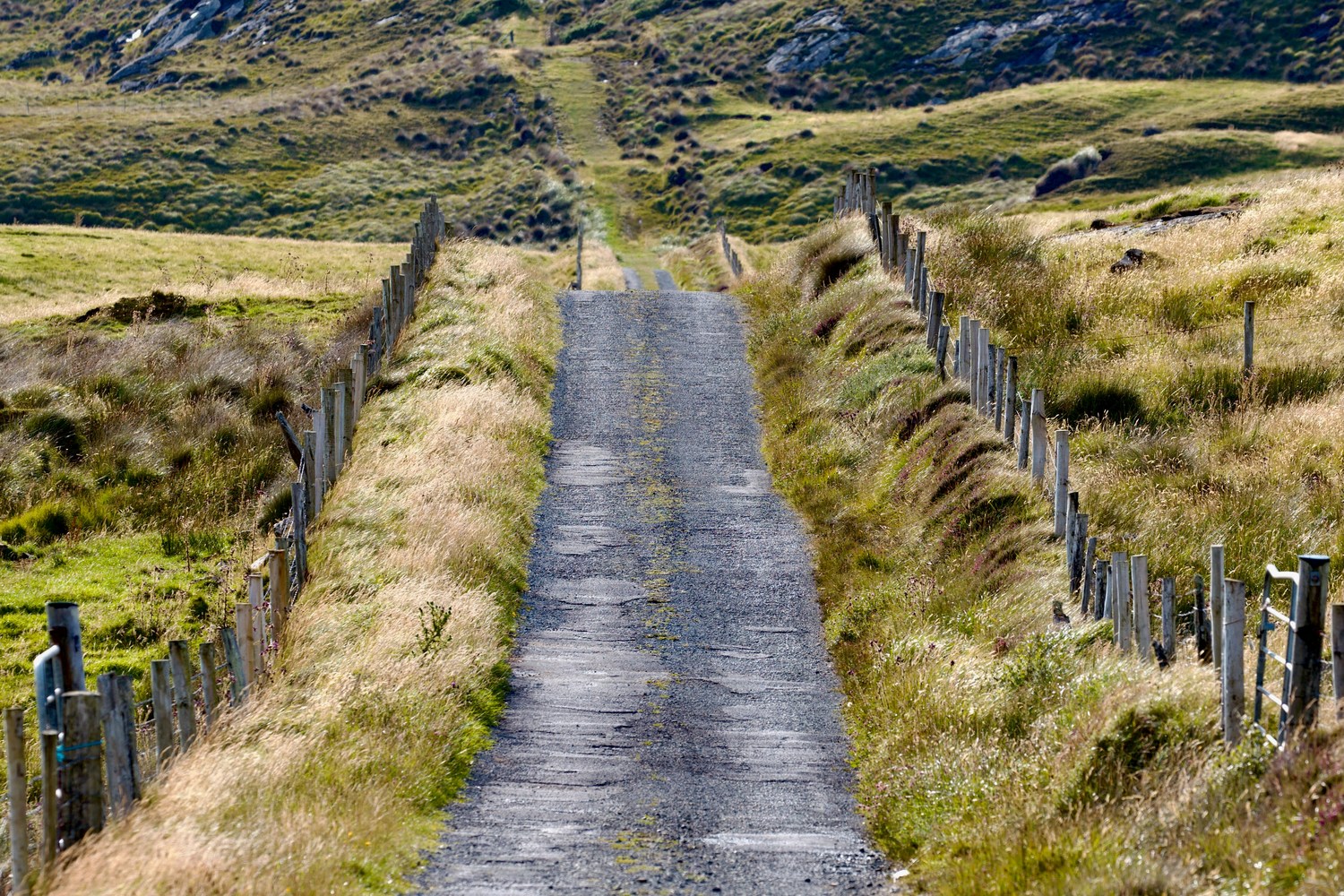
The past two days of the public inquiry into the proposed Sperrins gold mine saw heated exchanges over a public road running through the site, with police called after an objector to the mine criticised the handling of the inquiry.
Police were called on Wednesday after retired roads engineer Douglas Hill accused the Planning Appeals Commission over its “non-compliance” with policy.
Mr Hill was expected to give evidence on behalf of third parties about Dalradian’s application to take ownership of a public road that cuts through the proposed mine site.
It emerged that the Department of Infrastructure (DfI) Roads division failed to submit its statement of case on the Crockanboy Road abandonment proposal before the deadline, and as a result it can’t be used in evidence by the Commission.
Third-party objector Pat Haughey argued that the Roads division would have to hold a separate public inquiry on the road abandonment.
Commissioner Kenneth Donaghey, who led questions around traffic, transport and the road abandonment this week, told him: “If you have a point to make I would suggest you take it to a court of law. I am not hearing your procedural challenge.”
He subsequently had Mr Haughey’s microphone turned off, as the third party objector muttered “this is ridiculous”.
The situation escalated after retired roads engineer, Mr Hill, was accused of speaking over Commissioner Donaghey to say: “I have been to many public inquiries throughout my career. This is not a public inquiry set up for roads. This is non-compliant, this is a fact.”
Lead commissioner Jacqueline McParland interjected to say he was “disrupting proceedings” and asked that the PSNI be called, before adjourning.
Mr Hill left the room of his own accord and has been excluded from all future proceedings.
Commissioner Donaghey asked DfI for its view on the points made.
DfI’s senior counsel, David Elvin, said it is “accepted” that the conjoined public inquiry was a partial “departure from standards”.
He told the Commission that any road abandonment order will not be made prior to any grant of planning permission but it was “practical and sensible” for the PAC to consider it alongside the planning application.
Last month the PSNI removed a man who said he had a brain injury from Dalradian Sperrins gold mine public inquiry. He was making an unauthorised audio recording, and said his condition meant he was unable to follow the proceedings without it.
Road
Discussion later turned to the current use of the road and whether it remains necessary as a public right of way.
Mr Elvin highlighted that an abandonment order cannot be made unless Dalradian meets one of two conditions - that “the road is not necessary for road traffic” or “alternative facilities for road traffic will be provided”.
He said DfI had “formed a view that the use of the road is not necessary” but that “others held a different view”. He told the inquiry over 2,000 objections had been submitted against the order.
Objectors said the road is widely used by locals, walkers, runners, cyclists and horse riders, as well as providing access to a local mass rock.
Orla McCullagh, said: “I’ve been using that road since I was 13-years-old and I am now 44.
“We use the road regularly for our health and wellbeing,” she added. “Its not just a strip of road - it’s a part of us.”
Caoimhe Warnock, speaking on behalf of St Patrick’s GFC chair Martin Conway, said the abandonment order would directly affect Greencastle GAA.
She told the inquiry players use it for training when the pitch is too wet, while parents use the road to drop their children at training.
“An alternative route along a toxic waste pile is just not right”, she said. “We value our health and the health of our members.”
A statement read out on behalf of farmer Michael McDermott, who supports the mine and is part of the Silent Majority group, said the road “has been isolated all my life” and could be abandoned.
Dalradian’s counsel Stewart Beattie said their evidence cast doubt on how often the road is currently used.
He said: “The road proposed to be abandoned has never been tarmacked. There has been a difference in the treatment of that road by the statutory authority, since it became an adopted road in 1920.”
Surveyor Kevin McVitty outlined how he had visited the road on three dates since 2020 to carry out inspections and had seen only one person using it.
Ulster University lecturer Peadar McGabhann also challenged claims the road did not historically exist simply because it did not appear on early ordnance survey maps.
He outlined how the English “understood the mapping process, but we understood it as a tool of colonisation”.
Thursday
Thursday’s hearing heard concerns that the road closure could restrict access to a historic mass rock used for regular rosary gatherings.
Dalradian’s Mr Beattie submitted that the public would still be able to access the mass rock across fields from the site of the Greencastle People’s Office, “whatever the rights and wrongs of that”, as it is on Dalradian land.
Mary Brolly said the Crockanboy “road abandonment would interfere with pilgrimage and worship” while others asked how elderly people or those with disabilities could access the site if they had to cross fields.
The inquiry also heard that around 32 households retain an ancient right to dig turf within the proposed mine site.
Commissioner Kenneth Donaghey asked the mining company if it had assessed how the road abandonment would affect those rights.
Dalradian's senior counsel Stewart Beattie KC said “there isn’t a specific assessment” that could be carried out.
He said the company was looking at existing turbary access points but also suggested those exercising turf-cutting rights “may or may not be a trespasser”.
“We are not suggesting people are trespassing,” he later added.
Responding to third-party concerns, DfI’s Mr Elvin told the Planning Appeals Commission the “issue of private rights is not a matter for the department”.
The inquiry continues.