Hero color pe 00614205
‘The facts are the facts’: Ex-Ombudsman stands over Loughinisland collusion finding 10 years on
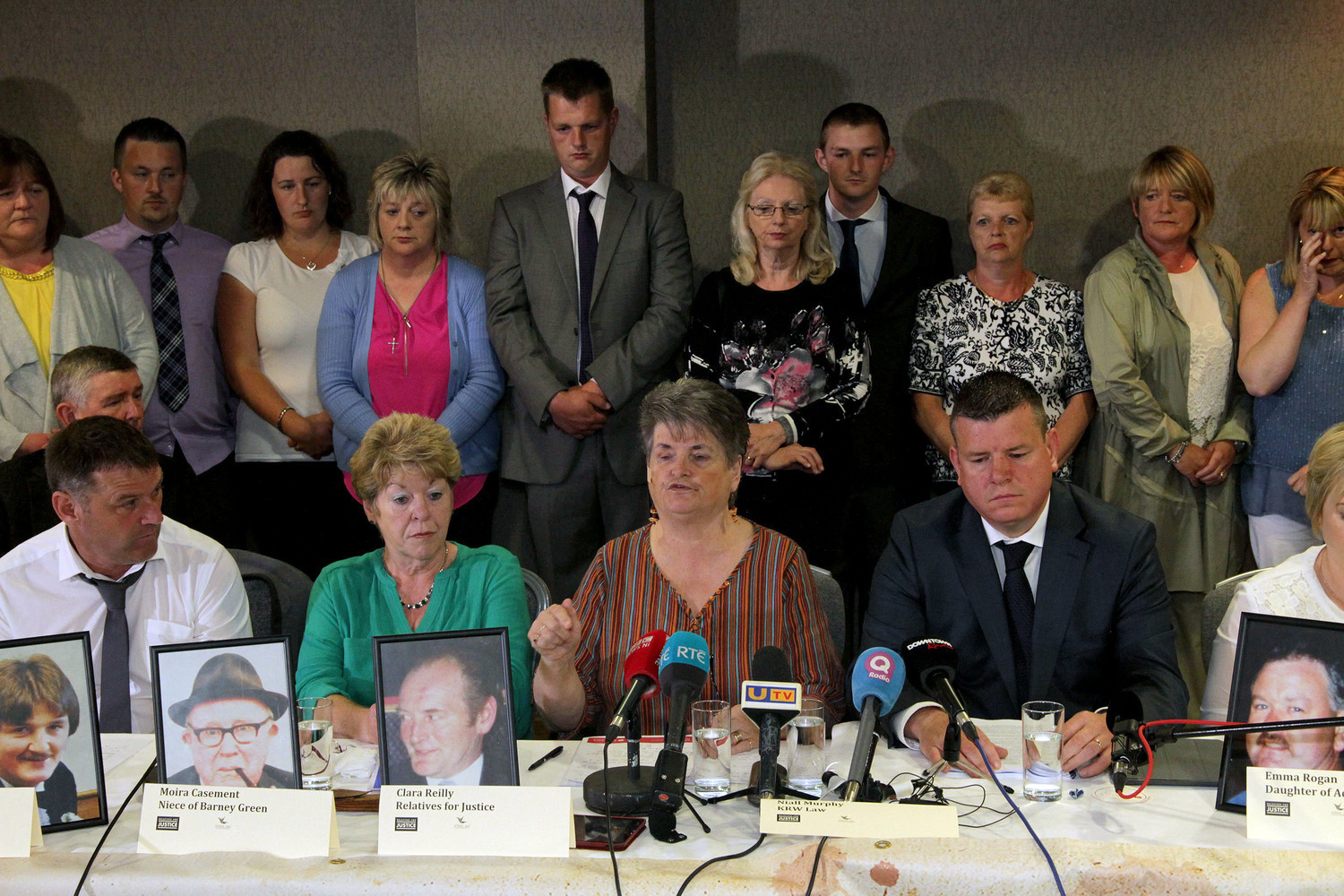
Relatives of those killed in the Loughinisland massacre speak after Dr Maguire's press conference in 2016. Photo by Colm O'Reilly, Press Eye

Ten years to the day since the then Police Ombudsman published his report into the massacre of six Catholics at Loughinisland, Dr. Michael Maguire says he stands over his finding of collusion.

The ten years have seen a series of legal challenges and two journalists wrongly arrested for their investigation, but speaking publicly for the first time, Maguire insists “For all of the litigation and for all the criticism, there hasn’t been any substantive challenge to the facts.”

“I had no concerns in using the term collusion. The facts are the facts, it’s not opinion.”

In a wide-ranging interview with The Detail, Maguire says:

· Legal attempts to quash his report failed and it still stands.

· The kind of report produced on Loughinisland can’t happen again due to a change in legacy legislation.

· He’s “stunned” that the new Independent Commission for Reconciliation and Information Recovery (ICRIR) hasn’t produced reports despite spending £60 million in two years and says “the jury’s out” on whether the body can be a success.

· He’s surprised that there’s no commentary on the fact that a new Police Ombudsman hasn’t been appointed, with the important office vacant since December.

The evening before the public release of the report in 2016, Dr Maguire privately met the families in Loughinisland GAA club, fulfilling a promise that he would let them know his findings before the rest of the world.

In emotional scenes filmed by documentary makers, some family members wept as they heard the term “collusion” confirmed officially for the first time in the murders of Barney Green, Malcolm Jenkinson, Daniel McCreanor, Patsy O’Hare, Adrian Rogan and Eamon Byrne.

Next week marks the 32nd anniversary of the atrocity in the Heights Bar, Loughinisland, when the six were gunned down by loyalists as they watched Ireland play Italy in the 1994 World Cup.

Nobody has been charged with the killings.

Maguire’s report was the second one carried out by the office of the Police Ombudsman of Northern Ireland (PONI). The previous investigation by his predecessor, Al Hutchinson, was rejected as a whitewash by the families who launched legal action to have it quashed.

Maguire took over the role in 2012 and he explains:

“The families were very unhappy with Al Hutchinson’s report. So, it was one of the first issues on my desk when I became police ombudsman. I looked at the report then and I wasn't happy with it. I thought it wasn't wide enough. I thought it didn't go into enough detail,” says Maguire, who won the support of the families when he decided to start again with a fresh investigation.

He believed they weren’t “stand alone” killings, and it was important to look at the sequence of events going back five years or more, particularly the importation of arms from South Africa to loyalists in the late 1980s, which included the VZ58 rifles used at Loughinisland.

“The gang and those involved around the murders had also been involved in some previous events as well. We took a more strategic view of what was happening as well as looking in much more detail at the Loughinisland murders, looking at the intelligence that the police had and so on,” he says.
Hero color pe 00614191
“Collusion”
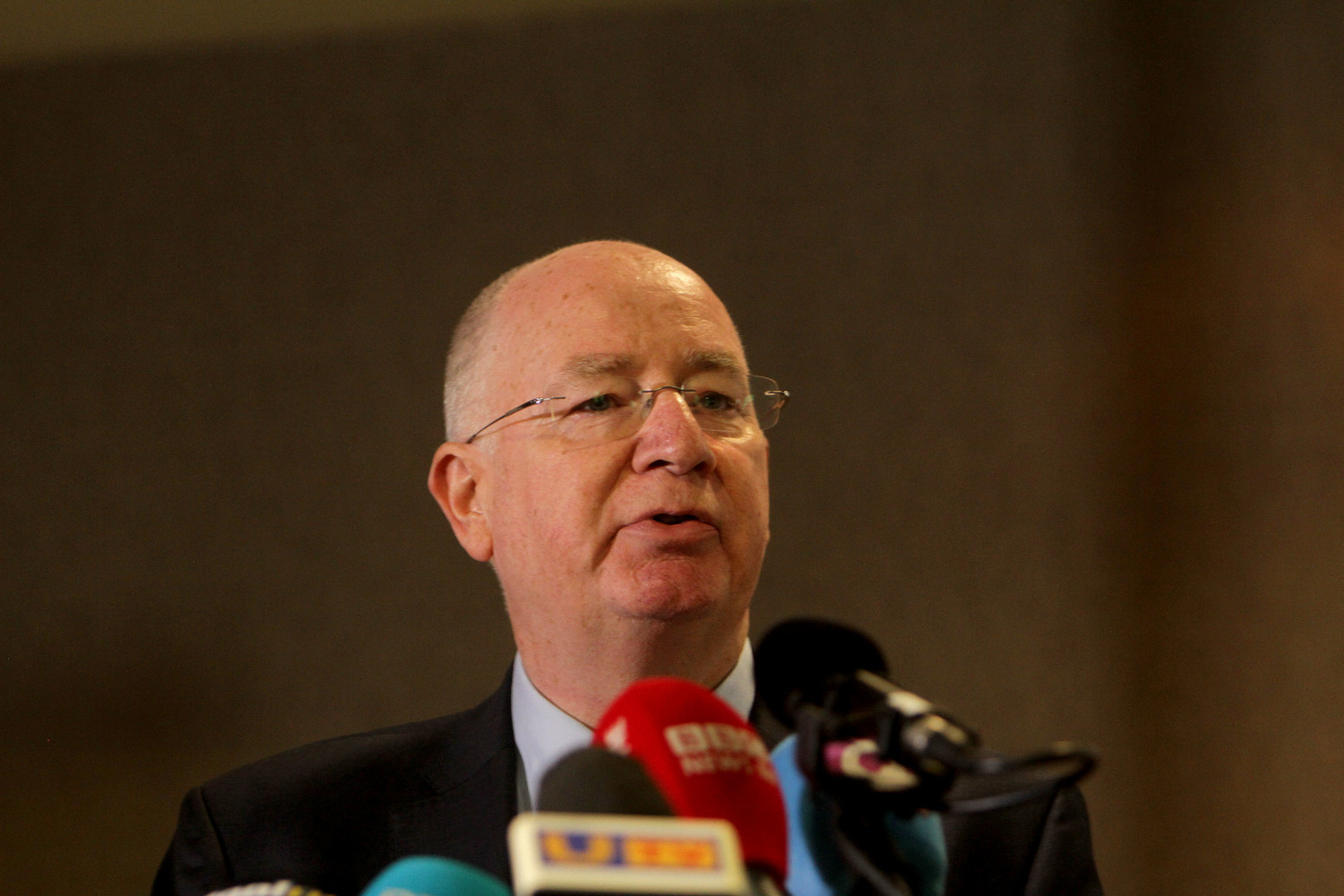
Dr Maguire at a press conference following the publication of his report in 2016. Photo by Colm O'Reilly, Press Eye

It took over three years of work by the Ombudsman’s office to investigate the context of previous years, the murders at Loughinisland and the subsequent police investigation.

Following the publication of the report in June 2016, there was a legal challenge from retired police officers, claiming that Maguire had exceeded his powers in using the term “collusion.”

“I had no worries about the facts. The facts are the facts. I mean, it's not opinion. And when you looked at what we saw in relation to the arms importation, the previous events, the intelligence that wasn't shared, the nature of the investigation itself, I had no concerns in using the term collusion,” explained the former Ombudsman.

“While I was Ombudsman, I completed about 10 or 11 significant reports dealing with legacy issues, all of which had the issue around collusion as part of what we were looking at. I actually only called out collusion once and that was Loughinisland. So, the argument that we were in some way obsessed with this term doesn’t get off first base,” he says.

“But, for me, it (collusion) justified the findings that we saw,” he insists.

Maguire says he wasn’t surprised by the reaction, adding, “It’s the nature of the beast that when you produce a report that’s critical, some people will not like it. So, you live with the consequences.”

The consequences were four years of litigation, with a judicial review in front of Justice Bernard McCluskey, who had to withdraw from the case because of an alleged conflict of interest. The case was then heard by Justice Siobhan Keegan, now Lady Chief Justice, ruling that the Ombudsman had acted lawfully and she dismissed the application to quash the report.

Maguire says, “Then it went to appeal, so there were more years of litigation. The final judgement of the appeal court was chaired by Declan Morgan and he said I’d overstepped the mark. But he understood why I’d used the term collusion because that was what the families understood those issues to be. So the report stood.”

“Out of a 44,000-word report, we probably amended three or four paragraphs and that related to issues about an individual officer.”

“So, the actual substance of the report stood,” he says.

Hero color pe 00780092
No Stone Unturned

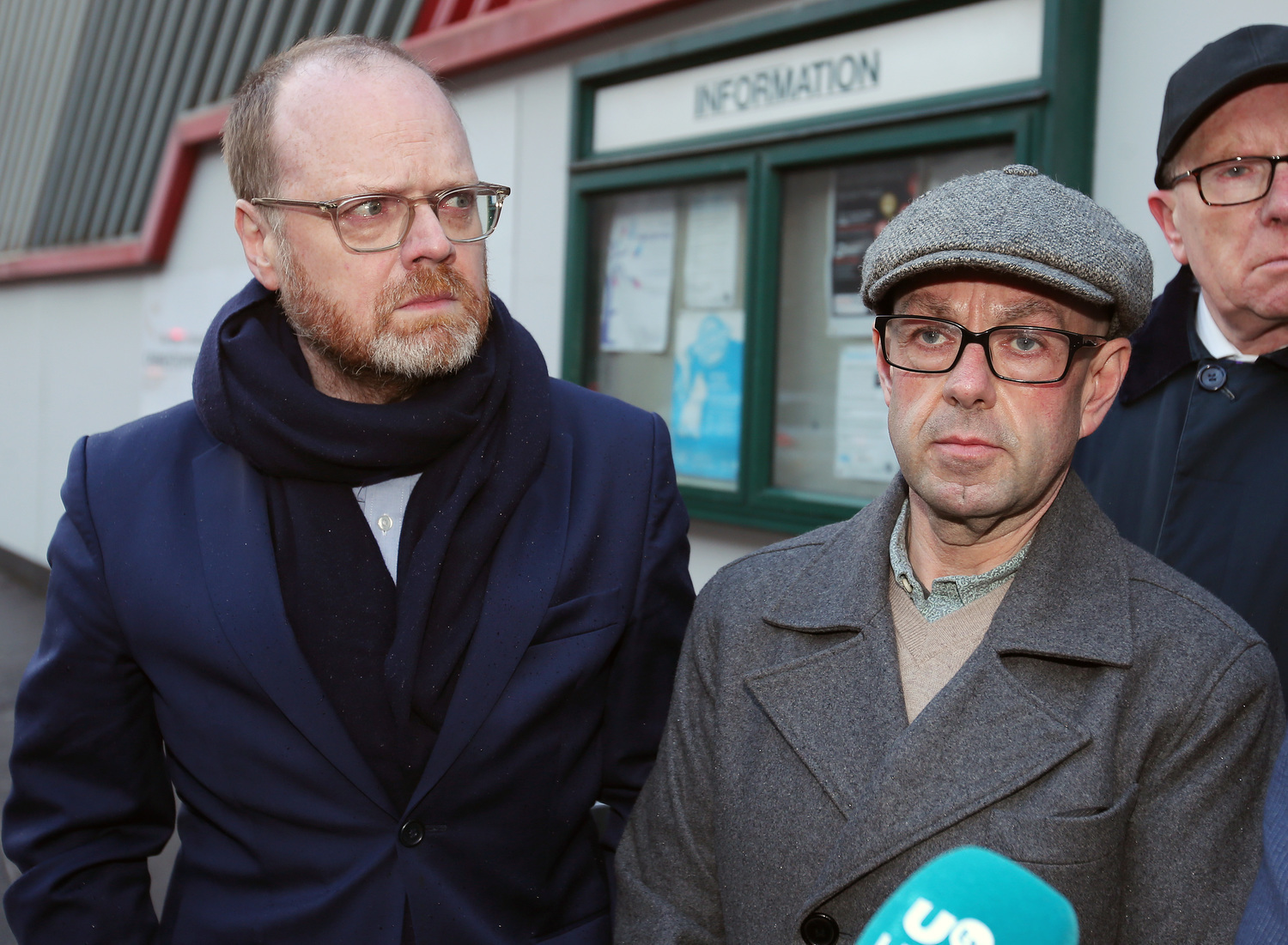
During the period of court cases, there was a further issue for the Ombudsman to deal with when the documentary “No Stone Unturned” was released in 2017. A year later, in August, 2018, the PSNI arrested the two journalists behind the film, Trevor Birney and Barry McCaffrey.

The film detailed claims about collusion and identified the alleged killer, using a document from the Ombudsman organisation.

Maguire admits, “I was blindsided by the document that appeared in the film. The first I saw of it was the first time I saw the movie.”

He says it wasn’t unusual for him to co-operate with film makers, having previously done so with the BBC’s Panorama and Spotlight programmes, albeit on a lesser scale and he says, “The families were engaged with the documentary. It was important for them that their story was told.”

“If you look at the quality of the people who were involved with it, Alex Gibney, being an Oscar-winning documentarian and Fine Point Films had that reputation, so one of my objectives was to ensure the findings of the report were accurately reflected.”

“One of the ways you do that is you participate,” he says, and he admits, “They’re documentarians. They’ve got a story to tell and they tell it in different ways.”

But he adds, “It did create difficulty for the office. You’ve got to remember this ran parallel with the judicial reviews.”

“There was a controversy at the time about whether I’d reported a theft. I hadn’t. My understanding was it (the document revealed in the film) could have come from a number of sources. It wasn’t clear for me at the time whether or not it had come from the office.”

While Durham Constabulary focused on Birney and McCaffrey, Maguire also faced questions and calls for his resignation.

“They asked for information, we gave it to them. I wasn’t concerned about what the outcome was going to be because I knew we hadn’t done anything wrong.”

He says he doesn’t wish to undermine the journalists’ work, but as far as everything else around the report was concerned it was “noise” and he says his report was “the best I could do to put as much information into the public domain for families that wanted answers to the sequencing as to how their loved ones died.”

“And no one has fundamentally challenged that report to this day, 10 years on,” says Maguire.

As to whether such a report could happen today, Maguire says, “No is the answer, certainly not from the Ombudsman’s office because it no longer looks at legacy work. That’s been taken on by the ICRIR, the new legacy body.”


“The way in which we deal with legacy has changed, and we don’t know what any new legacy body is going to do.”


On the ICRIR, Maguire says, “I was stunned to find they’d spent £60 million and hadn’t produced any reports. I’ve read Peter May’s report (for the Secretary of State) and he talks about an office that is slow, bureaucratic and seems to report by committee.”


“That doesn’t build confidence from a family’s point of view that these things are going to be dealt with. We’ll have to wait and see. I don’t think the Police Ombudsman’s office spent £60 million on legacy investigations over 25 years,” he says.


He says the ICRIR hasn’t produced anything at this stage and that building confidence from a family’s point of view is “crucial.”


Asked if he feels the ICRIR is going to work, Maguire replies, “I think the jury’s out in that regard.”


There are “barriers” he believes, such as the Secretary of State having the ultimate authority to decide whether a report is published or not.


As Ombudsman it was his decision, and legislation required the police to give him information.


“I think any organisation that deals with the past is going to be judged by its output. Unfortunately, at this stage we haven’t seen that. So I think ‘we don’t know’ is the honest answer and we’ll only know whenever we see the quality of what’s produced. That’s the only way you’re going to build confidence.”

Hero color pe 00734062
'PONI was groundbreaking'
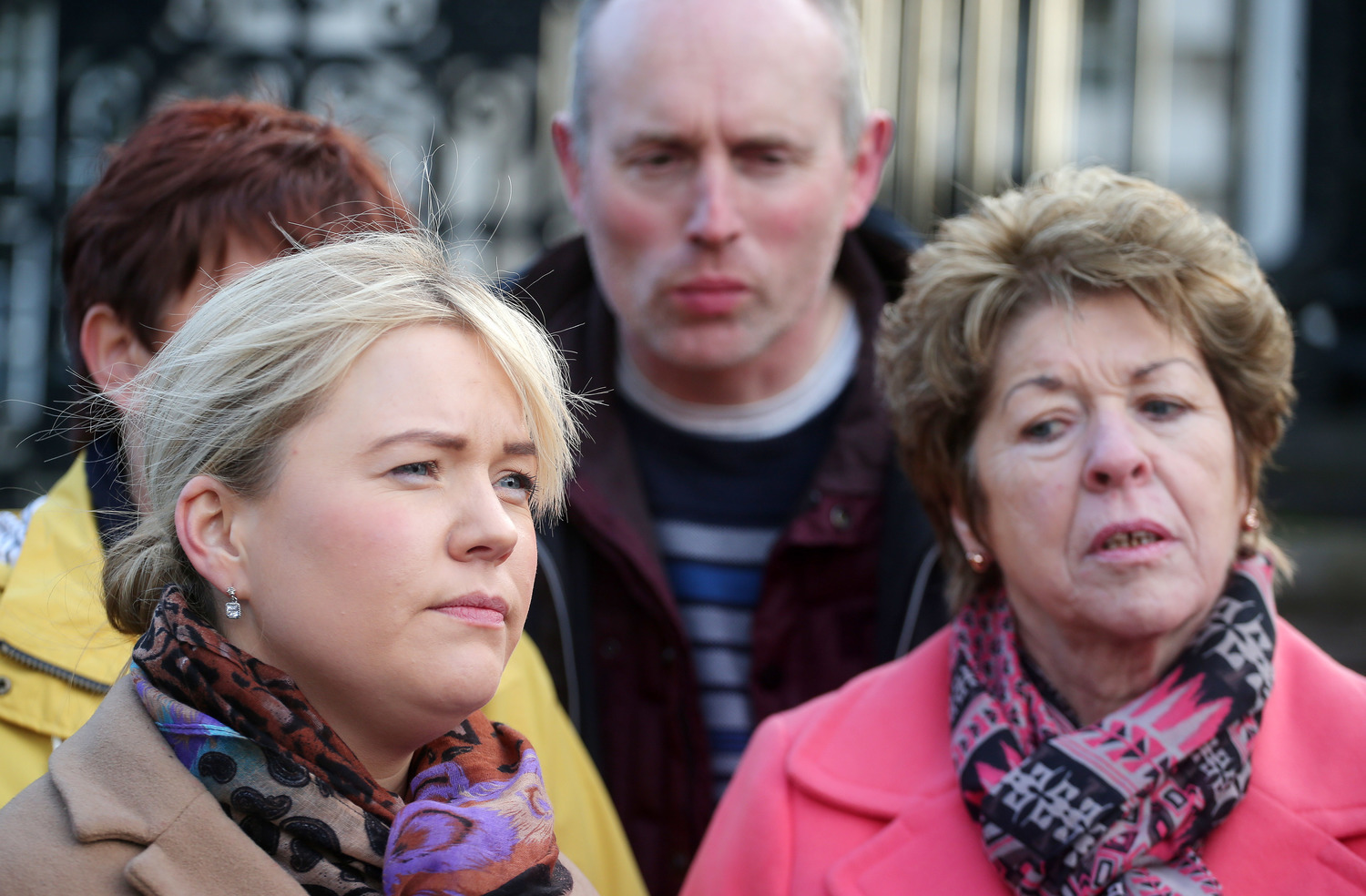
Family members of those killed in the Loughinisland murders outside the High Court in Belfast in 2018. Photo by Jonathan Porter, Press Eye

Maguire, who left PONI in 2019 after completing his statutory seven-year term, says he’s concerned that there has been no Ombudsman since Marie Anderson retired in December last year.

“There have been four Ombudsmen, and two of them haven’t run the full seven years. At one level, that shows that it’s a very difficult job,” he says, referring to the media and political scrutiny on the four, Nuala O’Loan, Al Hutchinson, himself and Marie Anderson.

“The previous Ombudsman left on December 31 last year and we still haven’t made an appointment. I think that’s an issue. Why has this appointment not been made?”

“I’m concerned about that because it’s a critical part of the policing oversight architecture. People have to have confidence in the individual as well as the office and I just don’t understand why there’s no commentary on this,” says Maguire.

“I do think the fact that no party is talking about it is surprising,” he adds.

Maguire has co-authored a “comprehensive history” of the ombudsman’s office titled “Holding the Police to Account” that will be published later this year.

He describes the setting up of PONI as “groundbreaking” but just one part of a “jigsaw” in reform of the Criminal Justice system post-Good Friday Agreement.

This included the Patten policing reforms, the establishment of a new Director of Public Prosecutions taking decisions over prosecution out of the hands of the police, and oversight bodies such as the Criminal Justice Inspectorate.

Previously, any investigation into the police was carried out by the police themselves, with oversight only from the Independent Police Complaints Commission and he says, “We run the risk of forgetting how bad it was prior to the setting up of the Ombudsman’s office.”

“I think we lose sight of the importance of police oversight arrangements here relative to how bad it was,” says Maguire.

Legacy became part of the Ombudsman’s remit, and he says, “It created a perception in some people's minds that we were only concerned with legacy, which was clearly not the case. We had 2,500 contemporary complaints against the police each year, some serious. We did significant reports into those.”

“Legacy wasn't a huge percentage of the budget. But it probably took up more airtime, for want of a better term. Because of the legacy of the past and the arguments over the past, the ombudsman's office kind of stepped into that,” says Maguire.

Legacy is not part of the Ombudsman’s work now, and with doubts over the ICRIR’s effectiveness, it raises the question of whether families waiting for answers will ever get them through the type of painstaking and independent work undertaken by Maguire and his team in the Loughinisland case.

Dr Michael Maguire will talk about his investigation into the Loughinisland massacre and its impact at a special screening of ‘No Stone Unturned’ this Friday, 12 June, at Queen’s Film Theatre in Belfast. Tickets here: https://queensfilmtheatre.com/Whats-On/No-Stone-Unturned

Receive The Detail story alerts by email
Subscribe on Substack