 By
By
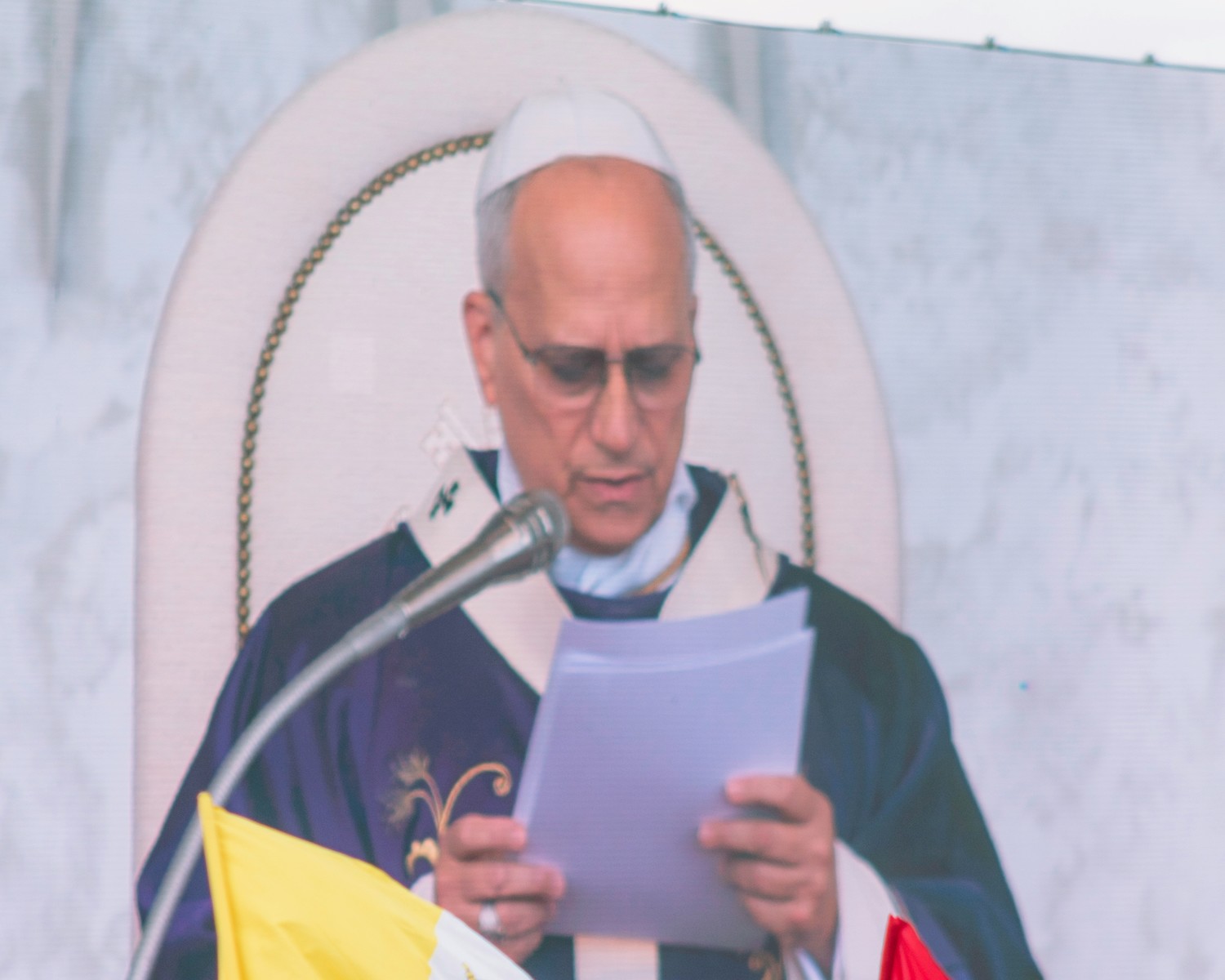
The Pope “would be totally opposed to the destruction of a sacred place” to mine gold, a priest told a public inquiry in Northern Ireland.
Fermanagh priest Father Joe McVeigh made the claim as the potential cultural and heritage impacts of Dalradian Gold’s contentious planning application were examined.
The North American company hopes to mine gold, silver and other metals in the Sperrin Mountains designated Area of Outstanding Natural Beauty for more than 20 years.
Over three days this week, the Planning Appeals Commission heard witnesses on a number of topics including a mass rock site cited by the priest and questioned by the applicant; an historic road; archeological assets like Beaghmore Stone Circles; cumulative landscape impact and intangible impacts like language, sense of place and cultural identity.
Dalradian’s experts said the gold mine would have "negligible" or "no" impacts on most of the issues outlined but third party objectors raised a series of concerns about their culture, language and identity. The Department for Communities Historic Environment Division (HED) said further assessment on archeological impacts was needed.
‘Outdated’ assessments
The first hearing of the week focused on potential impacts on archeological assets and how the proposed mine could affect the community’s ‘sense of place’.
Belfast-based archeological consultant Chris Long, of Gahan and Long, outlined their assessments for Dalradian. He told the inquiry on Tuesday how the proposed mine site is within 2km of 34 listed monuments, eight of which are regionally important and include Beaghmore, which is one of 11 Areas of Significant Archeological Interest in Northern Ireland.
Mr Long said the mine’s “infrastructure site… impacts both physically and on setting” of archaeological sites. It also emerged that impacts from the extraction or exploration areas hadn’t been assessed.
HED senior archaeologist, Adrian McAleenan, told the inquiry they agreed with the scope of Dalradian’s historic environment assessments in 2017/18 - but “eight to nine years later in 2026 we would consider some elements of the approach to be too narrow”.
He added: “The approach to assessing large scale development has evolved. In 2017 we agreed that would be 3km. Nowadays it would more likely be 10-15km to ensure a comprehensive and robust assessment.”
University College Dublin Associate Law Professor and cultural heritage law, environmental law and human rights expert, Amy Strecker, questioned Gahan and Long’s assessment methodology.
She said she saw no reference to folklore or the Irish language and that the latest international guidance should have been used, and cultural protection and rights considered.
“You have to apply standards to regionally and nationally important sites as they might at a time in the future become world heritage properties so you take a proactive approach.”
Community consultation
Prof Strecker also highlighted how “no community consultation” had been done on heritage impacts, which she described as “standard”.
Dr V’cenza Cirefice, who has researched the impacts of extractivism on communities, added: “Consultation with local communities should be the first step.”
A number of people from the Greencastle community told the inquiry that the mine will impact everything from the landscape that helped shape their cultural identities, and archaeological sites that once destroyed cannot be restored.
Dalradian counsel Stewart Beattie KC said it is “not clear how in the framework of planning policy...this proposal is going to affect folklore or language”.
He also argued against using the latest international guidance for their assessments, saying it is “geared towards the management and governance of world heritage properties”.
Fermanagh and Omagh District Council’s counsel, Conor Fegan, and the Department for Infrastructure's senior counsel, David Elvin, agreed that an intangible consideration like “sense of place” is a material consideration in determining the planning application.
‘Colonial power’
On Wednesday, discussions centred around the potential impacts of the mine on the historic Green Road and a mass rock site, both of which Dalradian’s team questions.
Testimony from members of the public suggested the Green Road was used during the Flight of the Earls in 1607 and the Battle of Formil in 965. Mass rocks emerged in penal times when priests and the Catholic faith were outlawed across Ireland by the English.
Dalradian counsel, Mr Beattie said “there is not a shred of evidence that this route (the Green Road) existed at any time before 1769” while archaeologist Mr Long said of the mass rock: “I do not believe this rock represents a mass rock from penal times”.
He cited a 2015 article by mass rock expert Dr Hilary Jane Bishop, saying it “does not fall in the standard classification for mass rocks”.
UCD’s Prof Strecker, however, said the Crockanboy Hill mass rock in Greencastle was mentioned on Dr Bishop’s website and provided a statement from her saying: “To state that ‘there is no historical, church or academic record of the Crockanboy Mass Rock’ is to show a fundamental lack of awareness of these sacred sites.”
Mr Long’s view on the road was “we are focused on the road that is there now - that is the asset we have to consider. It has been demonstrated that it was built in the 1790s”.
Third parties made the point that oral tradition, colonisation and penal times meant much of Irish history was not in written records often relied on today.
Dalradian supporters Monica Coyle, Sean McCrory and Veronica Teague, said they didn’t know of the mass rock growing up in the area.
Cormac McAleer from Save Our Sperrins told the inquiry that denial of the Green Road amounts to “eradication of the historic memory of the indigenous people… by a colonial power”.
Father McVeigh criticised the ‘division and disruption’ caused by the mining application, telling the Planning Appeals Commission: “I hope their planning permission is rejected.”
He added: “It’s an important issue to protect this site, not the rock, the site. The whole place is sacred.”
Peatland archeology
The mine’s impact on peatland archaeology took centre stage on Thursday, with Dalradian’s expert saying it would be "negligible".
Dr Gill Plunkett from Queen’s University said there was a 1% chance of finding stone or organic archaeological artefacts within the infrastructure site of the proposed mine as peat in some parts of the site is already very thin, given past turf cutting.
She added that there was “no evidence of archaeology in the development area” and “any risk to changes in the hydrology are likely to be minimal to any archaeology”.
HED disagreed with her findings, but the author of their report was unable to attend as the inquiry had changed the timetable causing a clash with another commitment.
Speaking on the authors behalf, senior archeological inspector Maybelline Gormley said: “The upland bogs of Tyrone have not been subject to detailed investigation or extensive development.
“Hydrological variations that the peatland in the area under discussion have experienced to date are within a relatively stable environment and the development will change that... therefore we would disagree that the probability of finding remains are slim to negligible.”
It emerged that not all peatland inside Dalradian’s ‘red line’ area on maps had been assessed by their experts as they don’t have access to large parts of the outlined site.
The inquiry continues.