 By
By
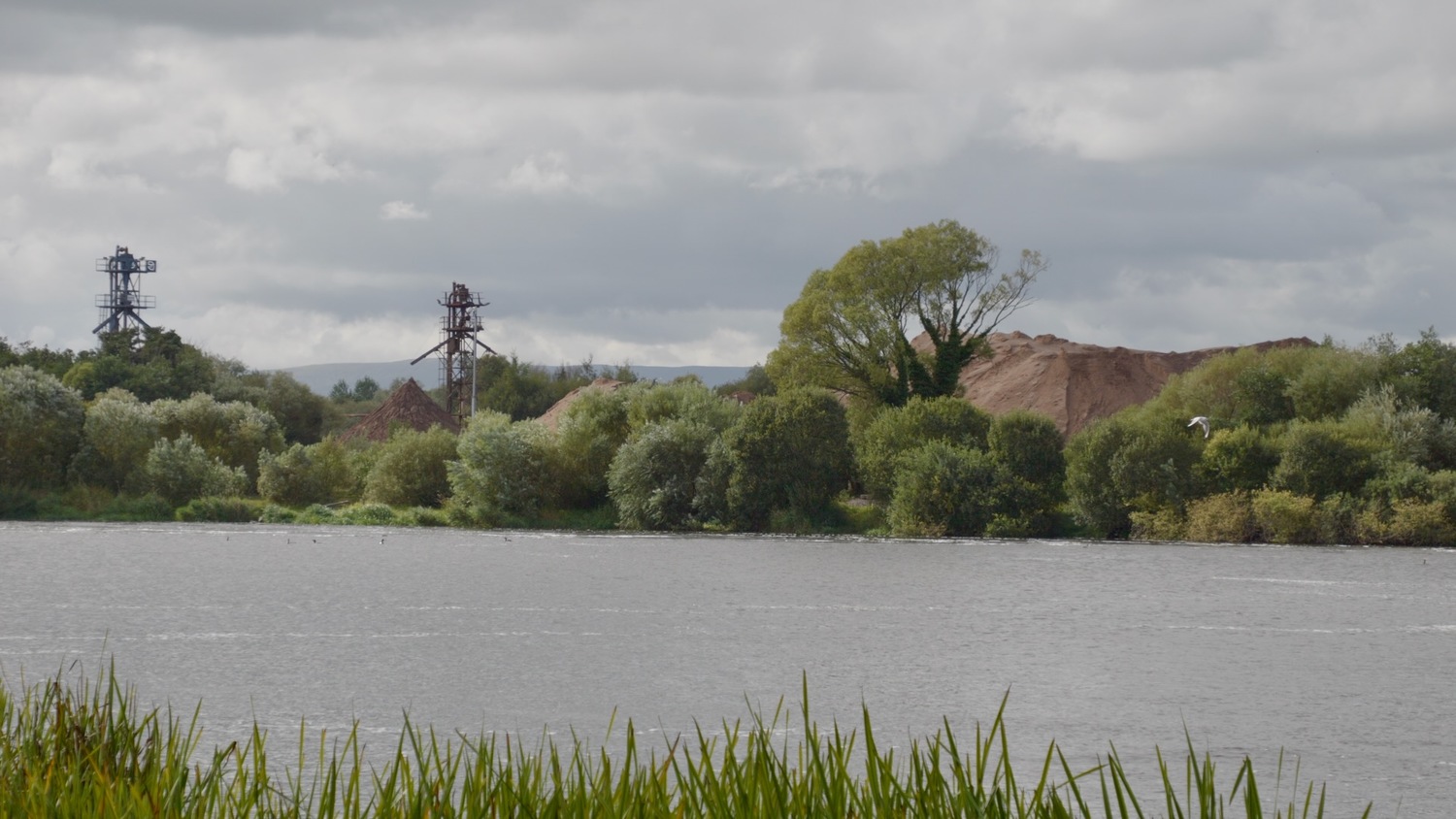
Sand mounds on the shores of Lough Neagh in 2022. Photo by Chris Scott, The Detail
New research appears to blow out of the water previous claims that industrial sand extraction at Lough Neagh is causing little or no environmental damage.
A new scientific study by Queen's University Belfast and Newcastle University points to a range of harmful impacts that suction-dredging the lough bed’s sand reserves may be causing.
The first-of-its-kind exercise, based on analysis of remote sensing and propeller wash calculations, has been published in the Journal of Environmental Management.
It builds on work commissioned by The Detail in 2022, which for the first time ever revealed scarring of the lough bed, cavities of up to 69 feet (21 metres), and a 17-metre lowering of the bed apparently caused by the extraction.
The new research, published on Wednesday, highlights problems concerning the extraction’s potential impacts on algal blooms, species loss and water clarity. It also, crucially, “suggests that the effects of sand dredging extend far beyond the point of extraction, influencing the entire ecosystem likely negatively effecting water quality, habitats, and biodiversity.”
These findings contrast sharply with public statements made by both the Lough Neagh Sand Traders (LNST) collective and Nicholas Ashley-Cooper, the 12th Earl of Shaftesbury, who has downplayed the environmental impacts of the activity he licenses through the Shaftesbury Estate company.
While the Earl – who receives annual profits from the extraction, based on a historical claim to the lough bed – is yet to publicly comment on the new research, the construction firms were quick to dismiss the findings of the universities’ peer-reviewed study.
Within hours of the study’s publication, the LSNT had bullishly told the BBC the research was “incorrect”. The LSNT cited a series of its own studies which “concluded there would be no adverse effect on the integrity of the Lough” as a result of proposed extraction rates of up to 1.5m tonnes annually.
What the companies didn’t mention in their media statement was that they had paid consultants around £500,000 to produce these studies.
Could public authorities, including Stormont’s Department for Infrastructure (DfI), have taken these industry-commissioned exercises at face value and not sought the independent studies necessary to make an informed and durable decision at Lough Neagh?
It would not be the first time in recent memory – or even this week – that this same department has bungled its approach to evidence and decision-making, as the ongoing inquiry into plans for a precious metals mine in Tyrone’s Sperrin Mountains heard on Wednesday.
Evidence
The Earl’s PR team has not responded to questions of what evidence the aristocrat had been relying on when he asserted that long-held concerns over the extraction’s ecological impacts were “exaggerated”.
The new research paper, notably, cited his previous “Claims that there is ‘no evidence’ linking commercial sand extraction at Lough Neagh to ecological damage or blue-green algal blooms (e.g. Ashley-Cooper, 2024).” These claims, the researchers added, “are not supported by the results presented here.”
There are a range of social and economic implications. Industry supporters point out that dozens of jobs, if not more, are tied to the lough’s sand reserves.
Ongoing protests in many parts of Ireland underline how vulnerable workers in sectors like construction are to geopolitical and climate shocks, which are likely to only grow over the coming decade.
If, as some campaigners are urging, industrial-scale extraction should stop – either temporarily or permanently – then what will happen to those jobs?
What support would be available, and what planning are Stormont and the companies carrying out, if any, to soften that blow for those working in the sector?
What if the sand reserves are being exhausted at the rates some have suggested in recent years?
These developments raise troubling questions of the weight some of Northern Ireland’s authorities attach to peer-reviewed independent research (scientific or otherwise) versus representations made – either privately or publicly – by vested interests.
Ongoing denials and deflection may be comforting, to some. They may defer or even shift the burden of inevitable and likely rising costs in the immediate term. But they don’t help resolve governance dilemmas that go beyond simply posing a significant environmental pressure (one of a number) on the lough system.
Tommy Greene is a freelance journalist who has written extensively about Lough Neagh. His book "Troubled Waters: How Lough Neagh Is Being Destroyed by Corporate Greed and Political Neglect" will be published later this year by Merrion Press