 By
By
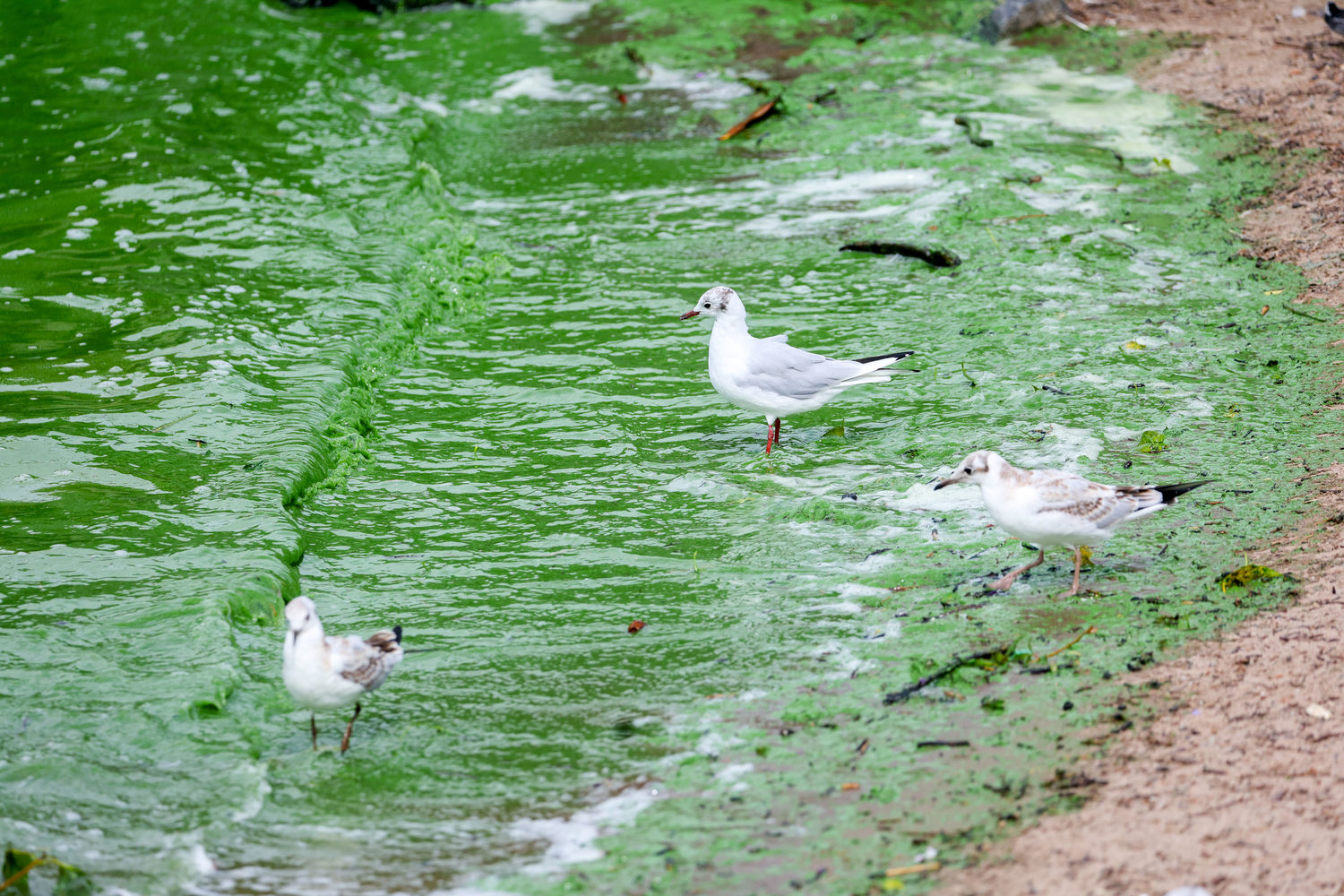
Pollution caused by agricultural runoff and sewage at Lough Neagh in 2024. Photo by Jonathan Porter, Press Eye
A rare interview from the Earl of Shaftesbury has reopened questions about ownership, environmental responsibility and who ultimately holds power over the future of Ireland’s largest lake.
====
Some eyebrows may have been raised when Nicholas Ashley-Cooper, the 12th Earl of Shaftesbury, recently gave a rare interview to the Irish News.
A profile of Mr Ashley-Cooper – the current legal owner of Lough Neagh’s bed and soil – centred on his belief that he’s been cast as a “villain”. Since the outbreak of toxic algal blooms in summer 2023 brought the lough’s long-term mismanagement to national and international attention, the multimillionaire aristocrat has received criticism online but has also found qualified support from some unlikely corners.
The media-wary Earl doesn’t often grant interviews to Irish press on Lough Neagh. And so this intervention has inevitably triggered a degree of immediate commentary – some of which has been insightful. A Substack blog post by Rebekah McCabe, from the public participation charity Involve NI, said the suggestion of a free transfer of the lough’s bed and soil is a belated but welcome gesture.
But some of Mr Ashley-Cooper’s other assertions in the interview also deserve close scrutiny.
Perhaps the most obvious one was a claim that long-held concerns over the environmental impacts of industrial extraction of sand from the bed of Lough Neagh are “exaggerated”.
A number of companies suction-dredge this glacial sand – a versatile building material, among other things – and pay the Earl, along with construction firm Northstone, royalties for each tonne extracted. Sand dredging companies spent £500,000 on studies to back their case that they are causing no environmental harm to Lough Neagh.
However senior scientists familiar with the lough, such as Glasgow University’s Professor Chris Harrod, have pointed out that the ‘scarring’ caused by this activity is a “very significant” impact on the lough system, requiring greater monitoring and further study.
An ‘independent review’ of the environmental impacts was ordered by Environment Minister Andrew Muir in summer 2024, following research commissioned by The Detail.
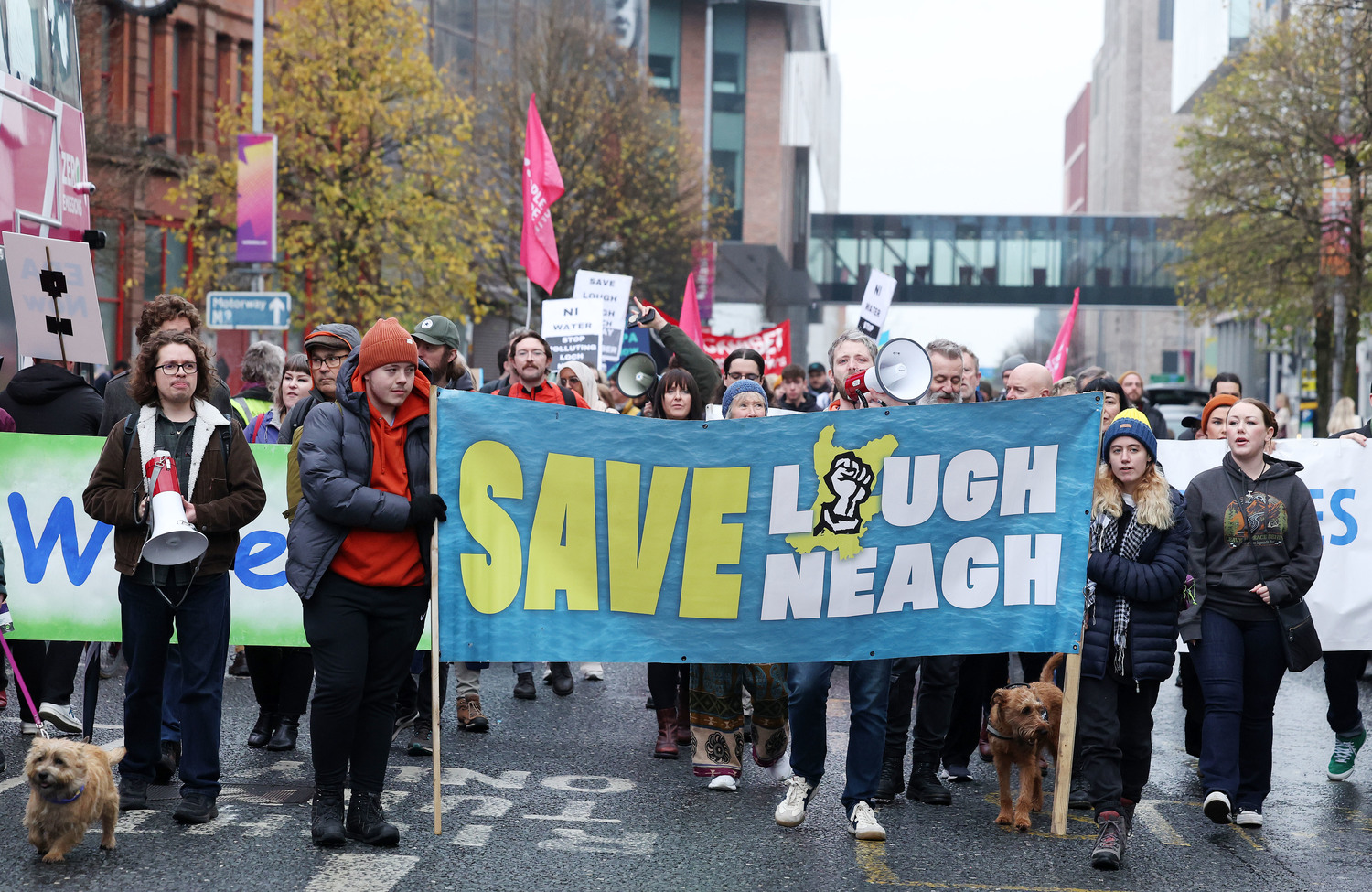
Protesters in Belfast highlight the ongoing issue of water pollution in Lough Neagh. Photo by Jonathan Porter, Press Eye
One area where the Earl is on firmer ground is the nearly non-existent role Stormont has so far played in tackling an environmental and public health crisis it helped to create.
Tom Collins’ Irish News column this week called for public ownership of the lough’s bed and soil. As The Detail’s research uncovered in 2022, it is something the Stormont administration of the 1970s spoke of in urgent terms, with senior officials saying it “would be madness” not to do this “at the first reasonable opportunity”.
Despite this history of missed opportunities having been brought to our politicians’ attention before 2023, public ownership is a question that Stormont has completely side-stepped thus far.
Stormont is, of course, not without its failings – it’s regularly found wanting in terms of transparency and accountability.
But it needs to adopt more leadership where Lough Neagh’s ownership and management are concerned. Even if there are strong arguments against public ownership (and there are), the case for it should be made and robustly scrutinised by our public institutions with the democratic mandate they hold.
Instead, the failure to do this has meant the lough’s future is largely being thrashed out behind closed doors, negotiated by a series of large landowners, private consultants, lawyers and researchers. These actors are not accountable to the public and, as Ms McCabe points out, this state of affairs raises the question: are we really looking at meaningful change here, or simply succession? Who decided this?
The Earl is, for many, a recognisable face that bridges a painful past with the unsettled present. But, in focusing on the past alone, there’s a risk of overlooking the role Mr Ashley-Cooper appears to be playing currently as “business owner”, as the Earl described himself in a 2023 BBC interview.
He didn’t attend nor did he choose to comment on an October meeting in Belfast at which plans to reshape ownership were presented to lough stakeholders. But the engagement is understood to have happened at his behest and the “regenerative” investor Christoph Warrack’s access – to an exclusive event on the lough’s future at Westminster and a Stormont ‘innovations lab’ by the lough itself – came about through contact with the aristocrat.
If the Earl is “ready to move” now, it’s not yet wholly clear why. His appeal for competing interests – political and otherwise – to “coalesce” around a shared position raises the obvious question that has dogged these talks: who determines that position? Whose interests, more broadly, are being represented and who holds the power?
Tommy Greene is a freelance journalist who has written extensively about Lough Neagh. His book "Troubled Waters: How Lough Neagh Is Being Destroyed by Corporate Greed and Political Neglect" will be published later this year by Merrion Press