 By
By
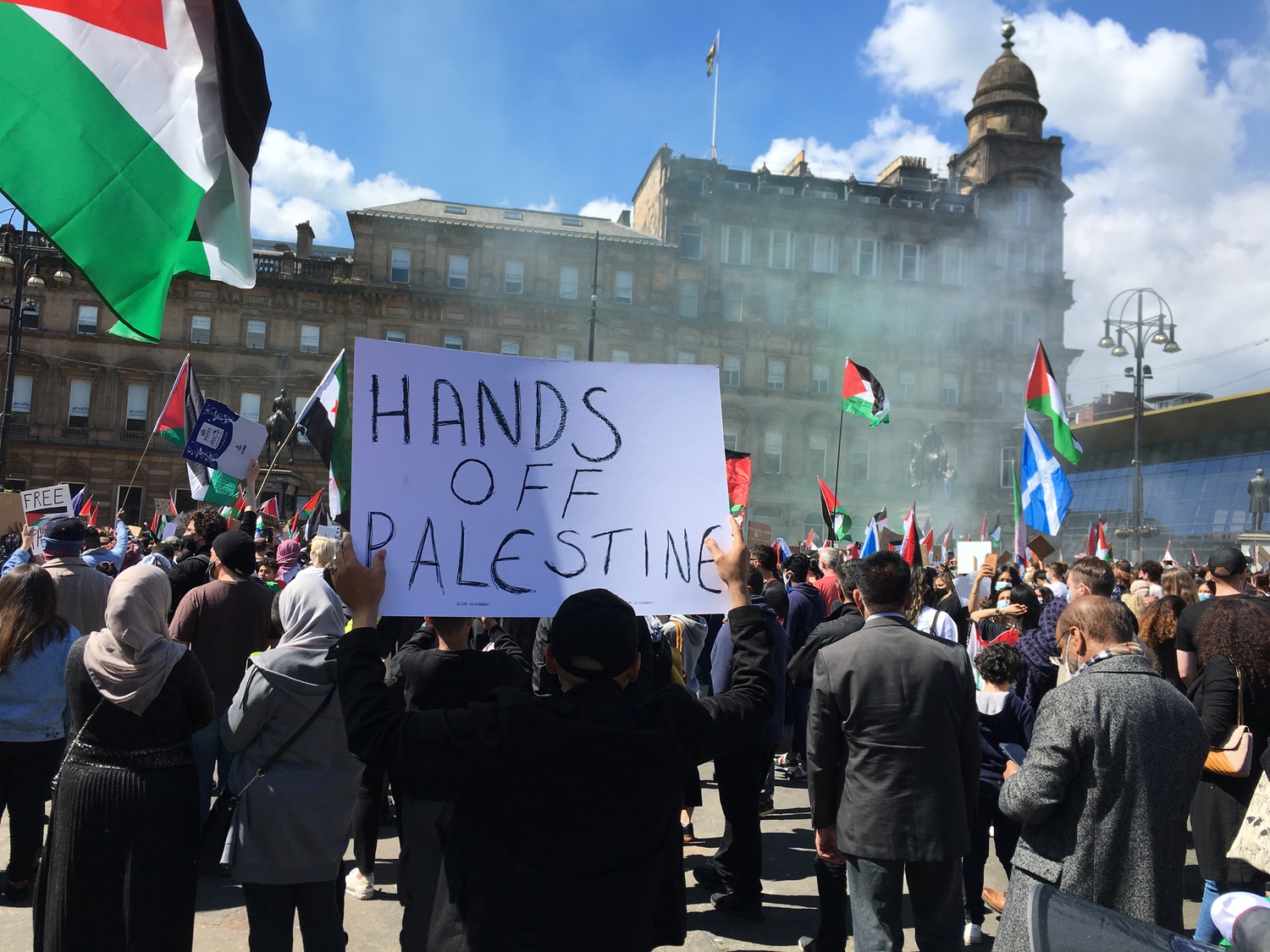
A Palestine protest at Glasgow's George Square. Photo by Karin Goodwin, The Ferret
Scottish prosecutors have received more than 100 reports of alleged terrorism related to Palestine Action in seven months, more than for any other proscribed group in the 26 years since the Terrorism Act was introduced, The Detail can reveal.
Figures released under freedom of information legislation show 103 reports of displays of support for the banned direct action group had been received by the Crown Office and Procurator Fiscal Service (COPFS) in Scotland by the end of February this year.
In total 193 such terrorism charges have been lodged in Scotland, with Palestine Action cases accounting for more than half. Most of the other 93 include allegations linked to the UVF and other loyalist paramilitary groups in Northern Ireland.
Palestine Action – which aims to disrupt UK support for Israel – was proscribed by Home Secretary Yvette Cooper in July last year. Section 13 of the Terrorism Act makes it an offence to wear, carry or display an item in public in a way that arouses “reasonable suspicion” that a person is a member or supporter of a proscribed organisation.
The Home Office said that it believed Palestine Action was “not an ordinary protest or civil disobedience group” and said it would always take the “strongest possible action” to protect UK national security.
However leading human rights organisations have raised serious concerns about Palestine Action’s proscription with UN human rights chief Volker Türk warning that the UK Government’s decision undermined “fundamental freedoms” to protest.
Dozens in Scotland have been arrested and charged with terrorism offences after attending protests wearing T-shirts or holding up signs in support of the banned group.
The new Scottish figures, obtained by The Detail and shared with Scottish investigative unit The Ferret, do not reveal how many of the charges led to convictions.
In February the UK High Court ruled that the decision to proscribe Palestine Action under anti-terrorism legislation was unlawful, however the Home Office is appealing its decision.
Neil Cowan, Amnesty International UK's Scotland programme director said the "revelatory" figures underlined “just how far-reaching and damaging the proscription’s impact has been”.
“People who are being criminalised for peacefully opposing the proscription of Palestine Action are being charged for something that should never have been a crime,” he argued.
“They have found themselves branded terrorists as the result of the UK Government’s sweeping use of counter‑terrorism powers to silence critics or suppress dissent.”
In response to the figures a spokesperson for the Crown Office said all reports were “fully considered and assessed in accordance with the law, the available evidence, and the public interest”, adding: “Scotland's prosecutors act independently at all times.”
A Home Office spokesperson said: “As the High Court acknowledged, Palestine Action has carried out acts of terrorism and is not an ordinary protest or civil disobedience group. The Court also found that its actions are not consistent with democratic values or the rule of law.”
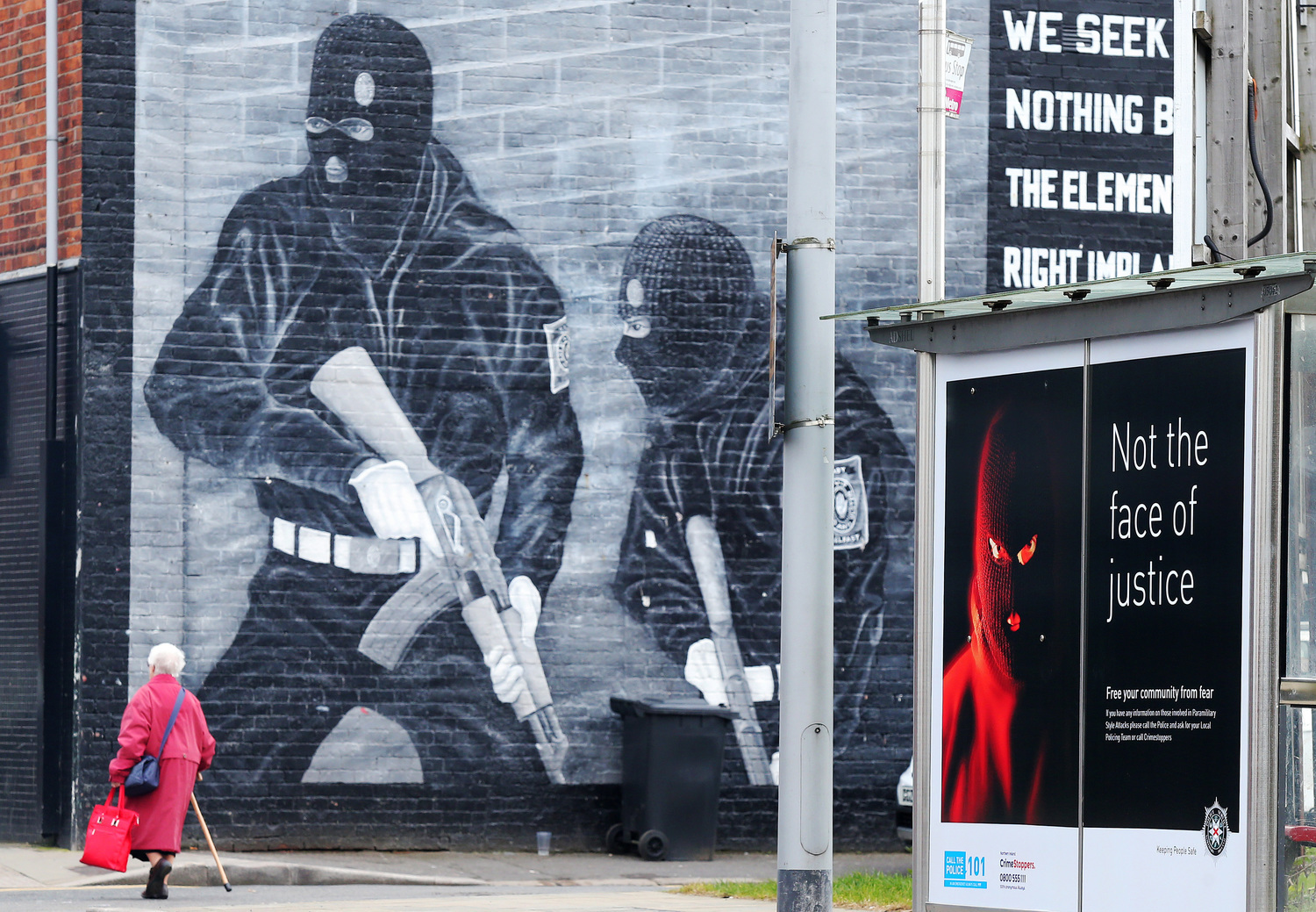
Paramilitary flags and murals are common in some parts of Northern Ireland. A UVF mural in east Belfast. File photo by Jonathan Porter, Press Eye
UVF
The majority of the non-Palestine Action related offences were for paramilitary groups linked to the Troubles.
There have been 66 alleged offences in Scotland regarding displays of support for banned loyalist paramilitary groups like the Ulster Volunteer Force, Ulster Freedom Fighters, and Red Hand Commando since the Terrorism Act 2000 came into force.
There were 13 charges linked to the Irish Republican Army, five alleging support for the banned neo-Nazi group, National Action, two for the PKK (Kurdistan Workers Party), and one relating to the Islamic State of Iraq and the Levant, aka Islamic State.
Crimes included a man successfully prosecuted after being caught with an Ulster Volunteer Force flag (UVF) on an orange walk in Glasgow in 2023, while a Livingston woman was fined for hanging an Ulster Volunteer Force (UVF) flag on her house while singing sectarian songs with lyrics in support of the outlawed terror group.
Experts said loyalist paramilitary groups are still active despite being banned under terror laws, with one claiming their support network in Scotland remains “essential” in terms of fundraising and a supportive subculture.
The Crown Office said all reports of criminality are “carefully considered on their own unique facts and circumstances”.
Dr Aaron Edwards, an academic at the Royal Military Academy at Sandhurst said banned loyalist groups are still in place with a paramilitary command structure, including in Belfast, Derry, and Portadown.
“The size and shape depends on where you look and they tend to be involved in low level crime: extortion from businesses, the taxing of drug dealers, everyday illegality, threats and intimidation,” he added. “They are persistent – a perennial feature. They are influential in parts of society, low-income neighbourhoods, akin to organised crime gangs elsewhere. But they are more muscular because of the paramilitary structure.”
In terms of Scotland, he said these groups have an “essential” support network in the form of flute bands, orange marches and a paramilitary subculture. “The connection is strong,” he added.
Describing the figures for Scotland as “remarkable”, Mr Edwards said they suggest that enforcement of a UK-wide law is “more robust” with crimes not tolerated, contrasting the situation in Northern Ireland where “flags with paramilitary slogans are everywhere which show support is tolerated”.
Professor Dominic Bryan, a social anthropologist at Queen’s University Belfast, added that policing of paramilitary flags is “far stricter” in Scotland than in Northern Ireland.
“There have always been links to Scotland and the most obvious is through flute bands that move between both jurisdictions in the summer months.
“Police Scotland and the Orange Order in Scotland are far stricter and stop displays of flags by bands. In Northern Ireland it is not uncommon for bands to march through town and city centres displaying paramilitary flags.”
The Detail revealed last month that there were eight times more prosecutions in Northern Ireland of republican paramilitary displays than loyalist ones over the past decade.
Between 2015 and 2025, there were 94 prosecutions under Section 13 of the Terrorism Act. Of those, 83 were linked to republican groups and 11 to loyalist organisations.
The Police Service of Northern Ireland (PSNI) has repeatedly come in for criticism over its approach to dealing with displays that glorify paramilitary groups.
The PSNI told The Detail then it is “fully committed to ensuring the fair, effective and legitimate safeguarding of people and property while taking action against any offenders”.
Karin Goodwin and Billy Briggs are journalists at Scottish investigative unit The Ferret