 By
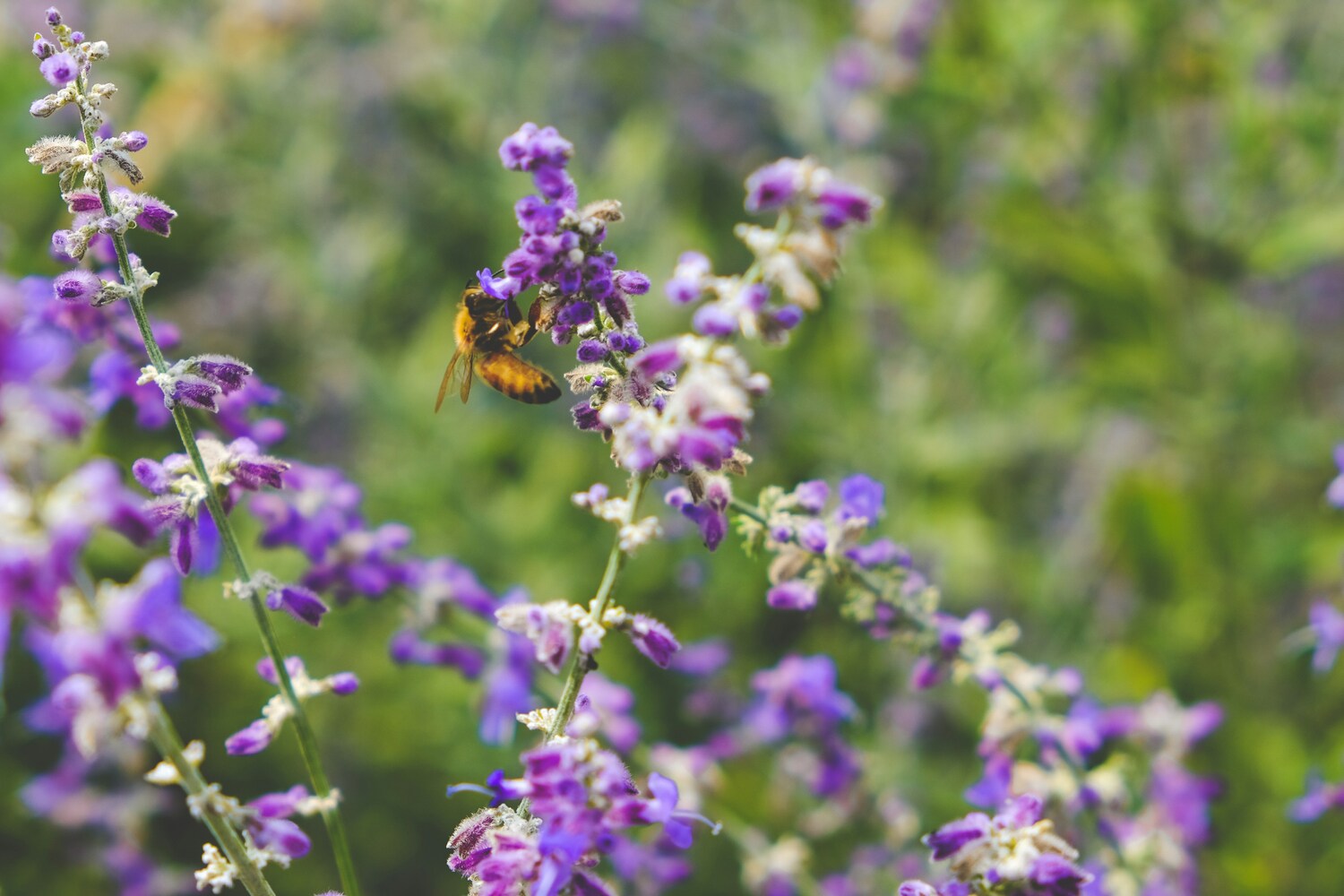
Dalradian says it will deliver at least a 10% improvement on ‘biodiversity value’. Photo by Scotty Turner on Unsplash
A gold mining company “would not even come close” to realising its own claims that it will improve the natural environment in the area it wants to mine, a public inquiry has heard.
Dalradian Gold hopes to extract thousands of tonnes of metals from the Sperrin Mountains, which is one of eight areas of Northern Ireland that are designated for their natural beauty.
The inquiry was also told that the mining company did not survey for potential impacts on a range of protected species.
Dalradian says it will deliver at least a 10% improvement on ‘biodiversity value’, despite not being required to do so under Northern Irish law.
Those claims were called into question by third party objectors at the inquiry in Omagh as the project’s potential ecological impacts on the land and wildlife in and around its 2,000 hectare site were examined over three days between October 8 and 13.
Questions were raised about the baseline ecological data from which the company was working as well as Northern Ireland Environment Agency’s “deeply concerning position”, which was said to rely on incomplete and decade-old information.
“How can [adverse] impacts be ruled out when the necessary evidence has not been collected?” asked Marella Fyffe, chair of campaign group Save Our Sperrins.
Fermanagh and Omagh District Council’s barrister, Conor Fegan, told the inquiry that a number of habitat features, including the site’s bogland, had been “undervalued” and that if the correct metrics were to be applied, Dalradian’s proposals “wouldn’t even come close to net gain” in biodiversity terms.
“We would suggest that – properly analysed – the applicant’s Biodiversity Net Gain case is simply the development consuming its own smoke,” he added.
"Selective surveying"
Consultant ornithologist and ecologist, Dr Marc Ruddock, also questioned the baseline data outlining how the failure to survey for the project’s potential impacts on birds “clearly undermined” any “full [and adequate] baseline” as he gave evidence for Save Our Sperrins.
Dr Ruddock described the existing species and habitats studies as “limited” in their coverage, which he said “increases the risk of under-reporting” potential species loss.
Dalradian Gold’s barrister, Stewart Beattie, said “precaution is a reasonable approach and not a demand for every single bit of data. Some bits can be left to a later date”.
Sacha Rogers, a consultant ecologist hired by Dalradian, outlined in her evidence how the applicant didn’t think surveys were needed for “sensitive” badgers as well as curlew, snipe, lizards, newts and bats as the 16 blasts a day from the mine would not negatively impact them.
Ms Rogers also told how mitigation measures for lizards, newts and the common frog could involve ecologists using “buckets” or “pitfall traps” to trap and place them in “a suitable receptor site”.
Cumulative effect
Dr Marc Ruddock - who is also a member of Northern Ireland’s Council for Nature Conservation and the Countryside - went on to highlight “a cumulative effect from the roads, the blasting and the power lines” in relation to the mine plans.
He told the inquiry that “assessing these in silos may not be appropriate”.
“The Commission must consider whether inadequate evidence is before it and this cannot be disentangled from [adverse] environmental effects.”
Sean Tracey from Communities Against Mining added: “It’s probably got to the stage now that the applicant could say it plans to blanket bomb the site up there and the NIEA would say it has no concerns.”
Northern Ireland Environment Agency’s director of the natural environment unit, Dr Mark Hammond, told the inquiry they had not considered the cumulative impact of the mine on every species combined nor whether protected species could be displaced into areas already occupied by other protected species.
Northern Ireland Electricity (NIE) Networks spoke on the potential impacts of its application to install almost 40km of new power lines through the Sperrins, with a loss of vegetation and 50 sq metres of woodland.
Despite concerns, NIE Networks said the work was considered “damage and disturbance“ rather than “a loss of habitat”.
Dr Ruddock meanwhile, told the PAC, “displacement cannot be treated as merely a construction phase issue” and that new, permanent overhead power lines “may influence species use of habitats considerably beyond the pole basis”.
The inquiry will enter its final week of hearings on Monday 9 November.