 By
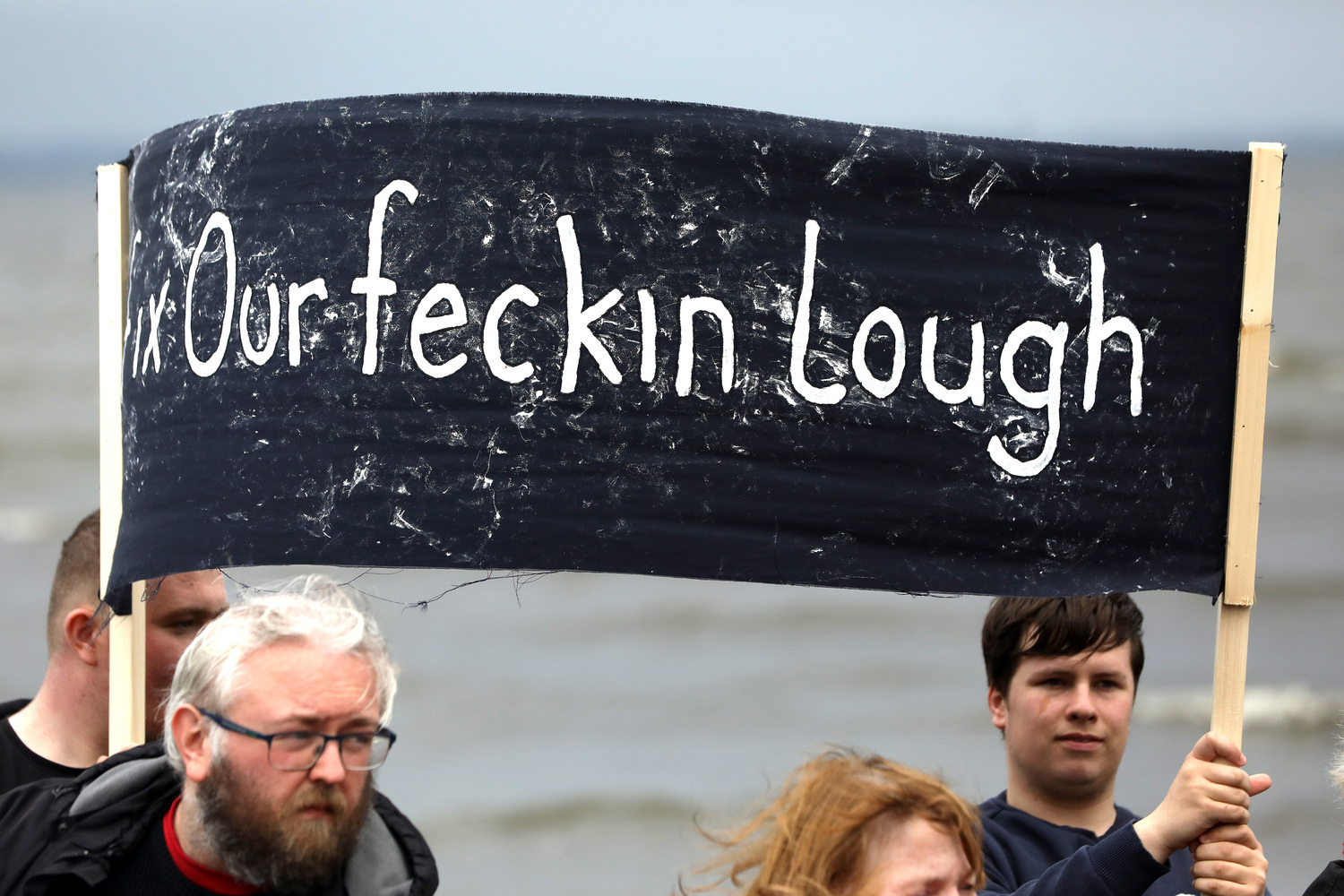
A wake held at Lough Neagh in 2023 as collective group voice their concerns over 'environmental disaster' at Britain's largest lake. Photograph by Declan Roughan, Press Eye
In this extract from his new book Troubled Waters (Merrion Press), journalist Tommy Greene introduces one of the most intriguing characters in the recent history of Lough Neagh, Nicholas Ashley-Cooper, the 12th Earl of Shaftesbury, who is currently the legal owner of the lough’s bed, banks and soil.
==
THE CURRENT OWNER OF THE lough’s bed and banks was no stranger to publicity when the events of summer and autumn 2023 began to unfold. But the public response elicited by the ongoing crisis was by no means easy to legislate for. He soon became a recognisable face bridging the unsettled present with a vexed past. A kind of folk memory – of Chichester as warrior-general who confiscated the water body – has long existed within many communities around the lough. But this entrepreneurial and still relatively young figure probably did not match the mental image many had of the estate’s inheritor.
Around six months prior to the first sustained press reports of algal blooms, he was seen sitting in the corner of the ground-floor function room at the Ballyronan Marina Community Centre. The discreet figure he cut then attracted little attention, according to sources present in the building. Flanked by a number of lawyers and personal assistants, the man in his early forties listened intently to the various items and interventions aired at the lough-shore public meeting, described by some attendees as heated in places. This was not the first time Nicholas Ashley-Cooper, the twelfth earl of Shaftesbury, had been at the multi-purpose community centre, which looks out onto the marina adjacent to the village. However, it would prove to be the last time for some two years that he would attend a public engagement of this kind or, indeed, appear so conspicuously near Lough Neagh.
The meeting had been called in early 2023 for the lough’s wildfowling groups. Grievances were also aired by lough fishermen, concerned by declining stocks and other ongoing threats to their ancient way of life. The multiple challenges facing this centuries-old livelihood were, within a matter of months, about to intensify and enter public consciousness in a way the industry’s struggles had not done for decades.
Tom McElhone, who takes a keen interest in local affairs along the lough’s western shores, stayed behind after the meeting’s business had concluded, speaking to a number of acquaintances near the back of the marina centre’s chief multi-purpose function space (known by most locals simply as ‘the Hall’). As he turned to leave, he says, another attendee standing by the door tapped him on the shoulder. In hushed tones, he was asked, ‘Do you know who that was?’ By the time McElhone learned of their esteemed guest’s fleeting presence, the earl was long gone.
McElhone recalls that the aristocrat looked relatively nondescript in spite of his small entourage. He was ‘dressed down’, he says, laughing. ‘He was just like one of us, nearly, although he sat over against the windows.’ The earl’s decision to sit apart from the crowd was deliberate, McElhone believes. Some sixty-five wildfowlers, along with some fishermen and interested residents, including McElhone, were in the room. Earlier that day, the earl had met with the Lough Neagh Partnership to discuss the lough’s management, and, according to an estate spokesperson, he did not believe it would have been appropriate to declare his presence.
A number of those present at the meeting believed Ashley-Cooper was there ‘to gauge public feeling’ in the area. McElhone believes the earl ‘knew he was chancing his arm at the time’ by attending. ‘There must have been around a hundred people in that room, at that meeting. And nearly none of us recognised him,’ McElhone says. ‘I, for one, would have pointed him out!’
Not all of Ashley-Cooper’s forays into the North of Ireland over the following eighteen months would pass without incident, though. The following summer, after an undeclared meeting at Queen's University Belfast, he was confronted by a group of young protesters. Video footage subsequently posted to social media shows the earl being doused with a bottle of water, thrown by someone out of shot, as he attempts to make a swift exit from the university’s city campus. Activists would continue to target and exert pressure on the earl, eventually bringing their indignation to the grounds of his vast estate in southern England and souring a number of summer events held there.
Yet, at the same time, Ashley-Cooper was to gain some support from unexpected sources over the same period. They included a former Sinn Féin election candidate and some leading figures from the North’s civil rights movement – themselves not naturally disposed to defend a member of the landed gentry whose estate they had been protesting against in the 1960s.
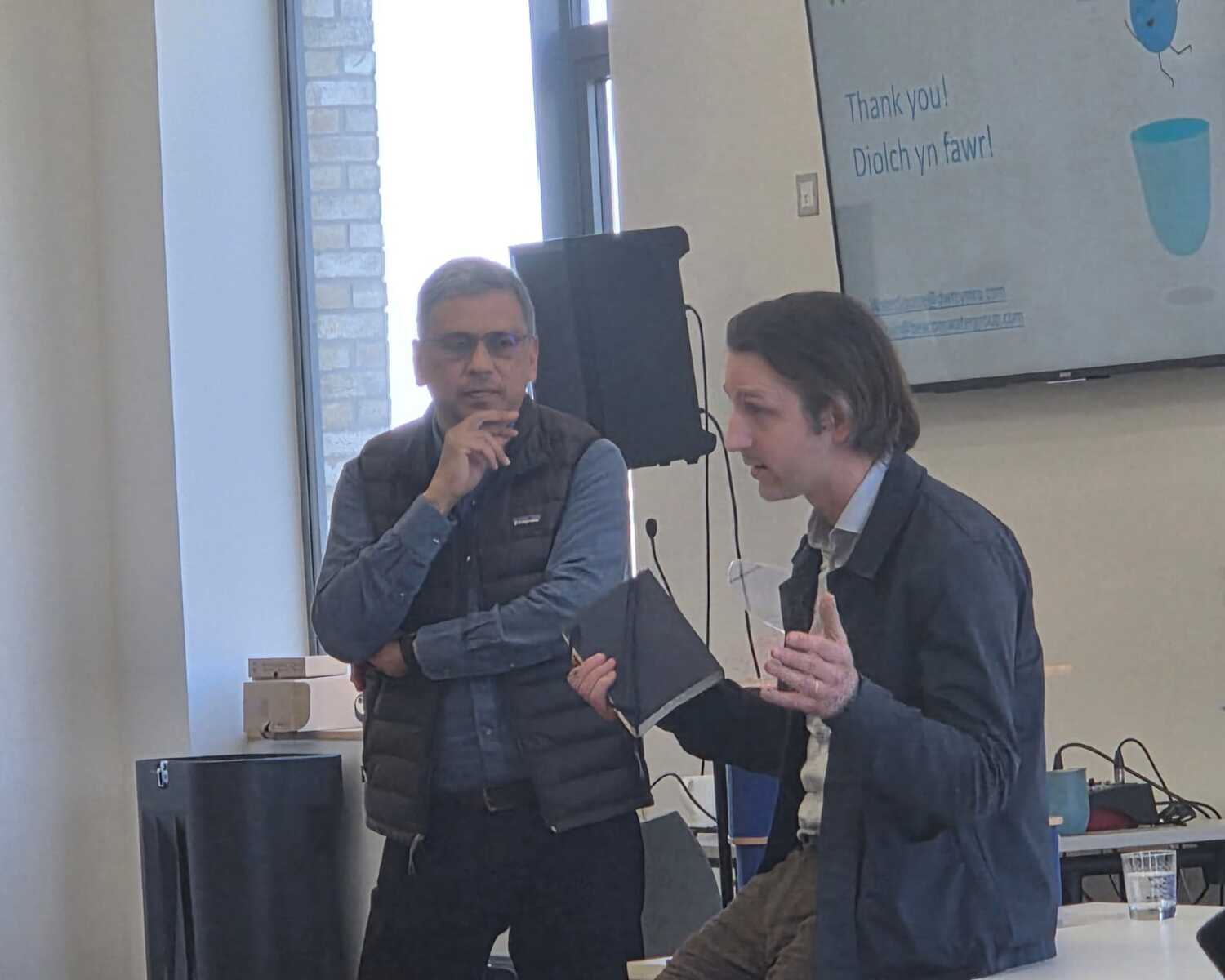
Nick Ashley-Cooper at a Lough Neagh event in 2026. Photo by Tommy Greene
Although he was not recognised by lough-shore residents on that occasion, Nicholas Ashley-Cooper’s life story had already been the subject of considerable – and wildly varying – publicity. Some of this exposure appeared to have been sought and cultivated by the present earl. Some, on the other hand, clearly had not.
When he inherited the earldom, aged twenty-six, the circumstances that gave rise to this premature accession had already become substantial tabloid fodder. A Channel 5 documentary that first aired in 2024 revisited the lurid episode that had gripped the imagination of the red-top press during the 2000s and into the 2010s. It shed new light on the murder of the current earl’s father, Anthony Ashley-Cooper (also known as ‘Lord Ashley’), in the French Riviera. The tenth earl’s fortune, upon inheriting the title in 1961, included ‘the greatest private library in England and houses in London, Hove (Sussex), Versailles, Paris and Nice’. At the time, he was reportedly considered ‘one of the ten richest people in the UK’.
When the twelfth and current earl came to inherit the estate, in 2009, what remained of it was estimated to be worth something in the region of £11 to £13 million pounds sterling, according to The Sunday Times. His inheritance reportedly included a château in Versailles alongside the 9,000-acre Dorset estate. The newspaper described the inheritor’s family as ‘cash poor but its company, St Giles Farms, had nearly £2m net assets in 2007. His father also left £6m in his will. We clip Shaftesbury back to £11m with asset values down sharply.’ On top of this, he reportedly inherited substantial assets in Ireland, including considerable landholdings in the Inishowen peninsula.
The number of tenants paying his estate ground rent across Ulster is likely to have decreased significantly from the heyday of the early twentieth century, when it numbered in the hundreds, but the gemstone among his Irish inheritance was, without doubt, his family’s colonial claim to the bed, banks and soil of Lough Neagh, spanning hundreds of square kilometres of territory. As the 2010s progressed, however, and certainly by the 2020s, his inheritance of the lough may have begun to be viewed as something closer to a prolonged headache, if not worse.
The backstory to this inheritance was itself a painful episode. It began with Lord Ashley’s relocation to the Mediterranean in 2000, where he met his third wife, Jamila M’Barek, a French-born Tunisian model and escort. In November 2004, after their marriage and subsequent separation, it was reported that Lord Ashley had gone missing in the Côte d’Azur. Five months later, his largely decomposed body was found in a remote ravine. Jamila’s brother Mohammed was later convicted of his murder. Amidst the disputed events leading to the tenth earl’s death had reportedly been a pledge to bequeath to Jamila property worth several million pounds in Ireland, along with a monthly pension worth up to £7,000. Press reports of the murder case’s prosecution do not specify the Irish property being referred to by the lawyers acting in the trial.
The title then fell to Anthony Nils Christian Ashley-Cooper, who became the eleventh earl, but he died of a heart attack in May 2005 – one month after his father’s remains were discovered – aged just twenty-seven. His death occurred while he was visiting his younger brother, Nicholas, who was then living in Manhattan’s fashionable East Village neighbourhood and DJing under the moniker Nick AC.
These were inauspicious circumstances in which to inherit the ancestral estate. Britain’s conservative press marvelled at how this ‘tattooed young raver’, as the August 2015 headline for one Telegraph profile called him, was setting out to restore the family’s crumbling ‘country pile’, St Giles House in Wimborne, Dorset. According to the website of a festival he hosts on the grounds of this stately home, the current earl has since become ‘the first Shaftesbury in 50 years to live in St Giles House’, which has undergone a considerable renovation or ‘restoration’.
A spokesperson for the earl and estate asserted that no income from Lough Neagh has gone towards the renovation of this ‘gargantuan and grandiose Grade 1-listed pile’ in a statement provided for this book. For some, however, such rebuttals serve as an ongoing reminder of the archaic payments – ones that local politicians argue could, at the very least, be reinvested towards Lough Neagh’s protection if private ownership of the lough bed were to end.
Publicly available information on land ownership is more scant and opaque in Northern Ireland than it is in any other region or jurisdiction on these islands, but by dint of the lough’s bed and bank surface area alone, Ashley-Cooper is still likely to be one of the biggest landowners in the North, if not on the entire island of Ireland.
In addition to the earl’s principal claim to Lough Neagh, some sixty other actors – including councils, NI Water, private landowners and smallholding dwellings – were, in the mid-2010s, estimated to operate and manage fragments of the bed and accreted foreshore. Each of these additional landowners had secured some kind of lease – usually long-term – of their patches from the Shaftesbury Estate and in many cases they pay an annual rent. This includes both private landowners and public bodies using this vast territory, from the Fishermen’s Co-Op to the public authorities running local services.
The current earl has not relinquished his income from, or his ownership of, the lough during the intervening period, recently citing a lack of viable proposals. In August 2023, this author asked the estate how much it had been paying back into the lough. A comment provided on the earl’s behalf stated, ‘The estate has agreed to contribute to projects developed by the Lough Neagh Partnership […] with whom the Shaftesbury estate of Lough Neagh Ltd has worked closely for many years as one of its members.’ While a figure was not put on these contributions at the time, a representative for the estate clarified in late 2025 that ‘approximately £12K has been given to Lough Neagh Partnership over the last two years’, adding, ‘A significantly greater sum has been committed to Lough Neagh Partnership by the Estate over the next three years, however we are unable to disclose full details of the commitment until finalised.’
Such payments may be relied on as evidence of good ‘environmental stewardship’ of the lough. This descriptor was one Ashley-Cooper ‘would underline’ publicly by summer 2025 amid an escalating PR battle over Lough Neagh’s condition, as its wider ecosystem appears to have moved into accelerated decline.
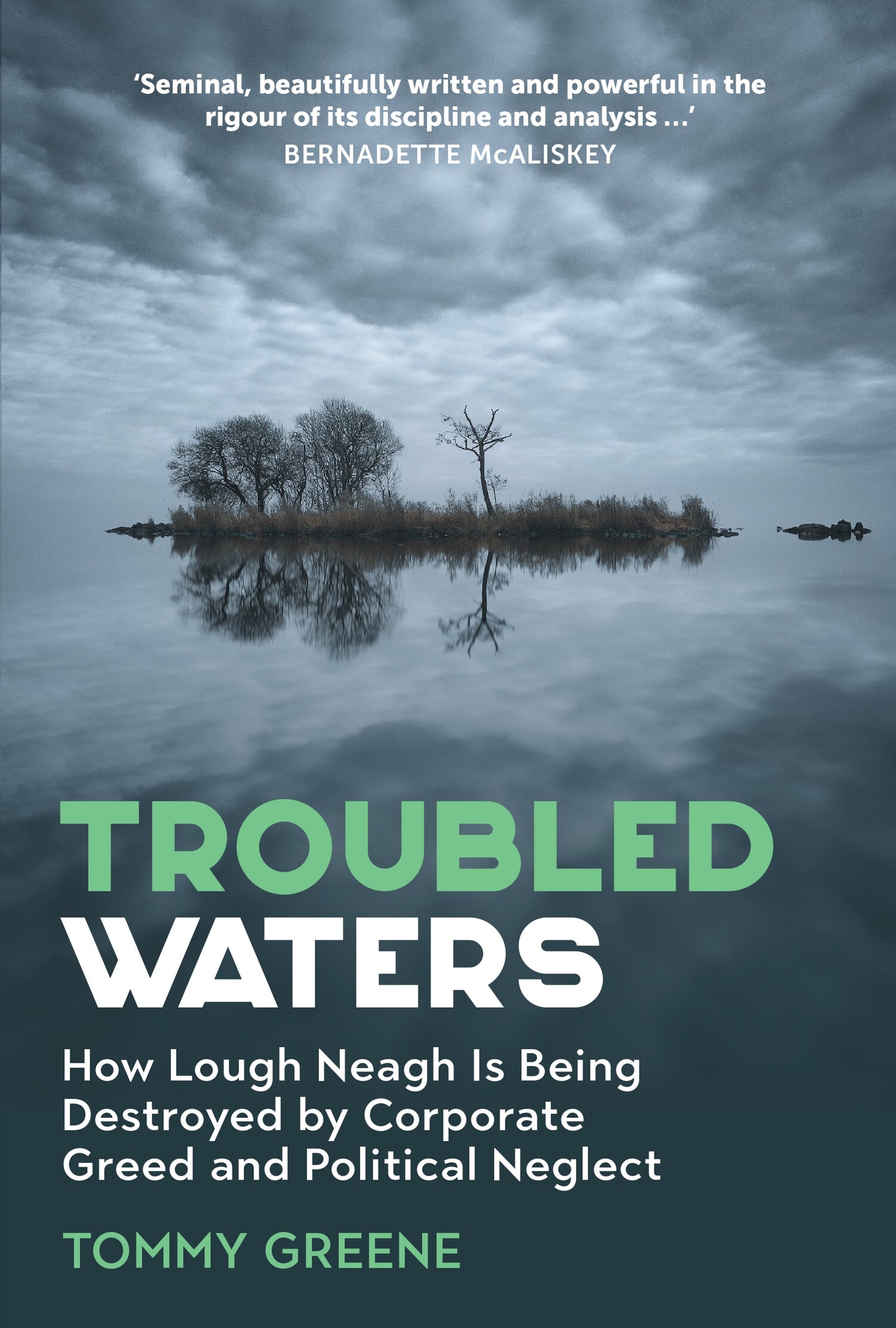
Tommy Greene will be at Belfast bookshop No Alibis today (26th November) to launch his book, in conversation with journalist Sam McBride and special guest speaker Bernadette Devlin McAliskey. Tickets here.