 By
By
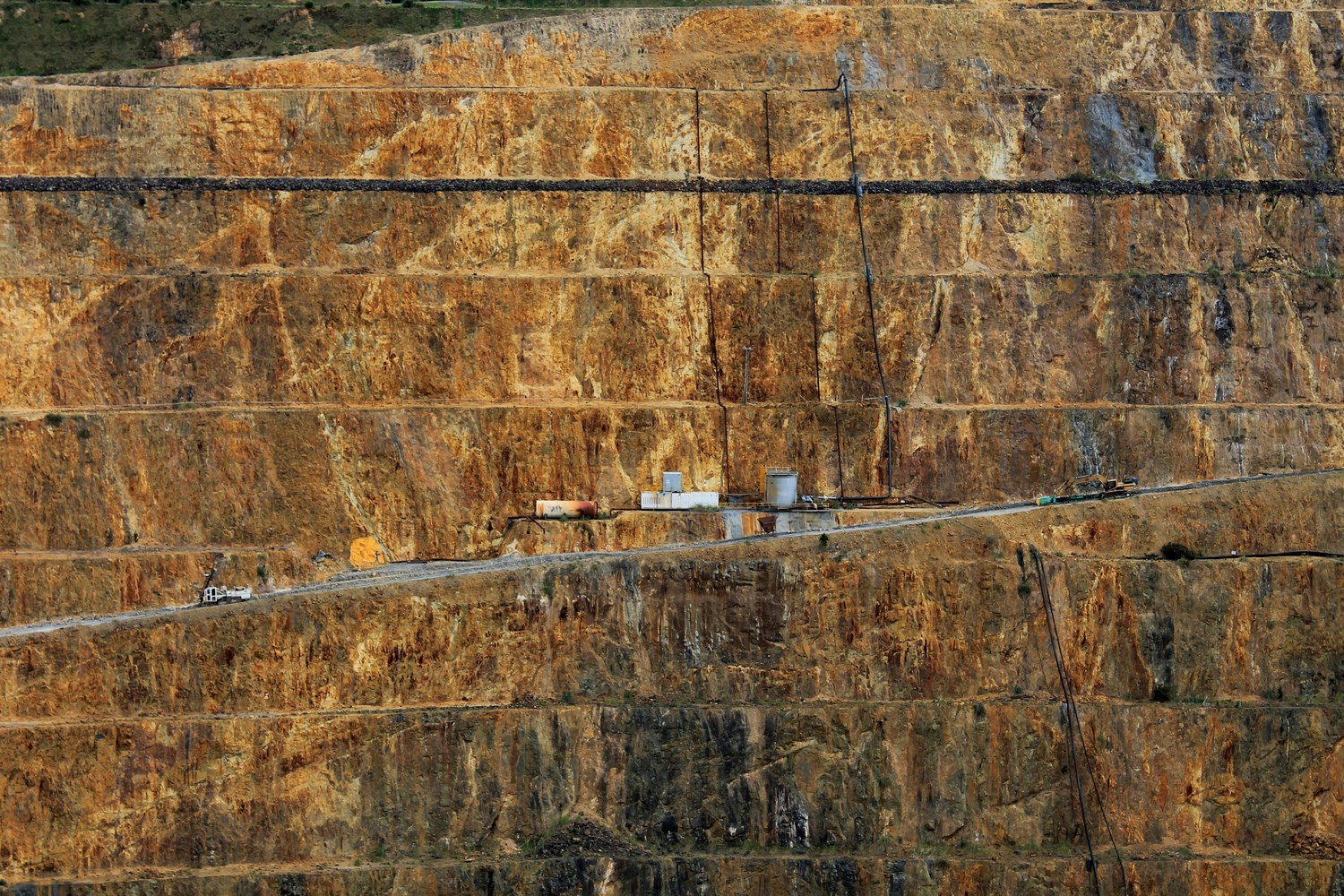
A gold mine in New Zealand. Photo by Leonie Clough on Unsplash
Mining is among the world’s “deadliest and most dangerous” industries, an international NGO has told an inquiry into a proposed goldmine in the Sperrin mountains.
Chris O'Connell, policy and advocacy advisor at Trócaire, told the inquiry that he and his colleagues had observed many harms in other mining projects around the world.
Drawing on case studies in Latin America, Mr O'Connell listed some of the adverse impacts his organisation had become aware of including “extremely elevated levels of depression, sleep anxiety, substance abuse and people attempting to leave the area and move away.”
He explained: “What brings these things on are threats, intimidation…and actual criminalisation and imprisonment. We would see these as examples of psychological terror tactics that are deployed against communities.”
Mr O’Connell stressed that, of all sectors monitored by human rights groups worldwide, mining was the most violent and most lethal.
“The mining sector is among the deadliest and most dangerous,” he said. “Basically, violence is like a shadow that follows mining around the world.”
Stewart Beattie, a barrister acting for Dalradian, dismissed the comparisons between mining cases in Latin America and mining proposals for Northern Ireland.
“I don’t accept the comparisons between the legal systems in Guatemala and the United Kingdom or indeed the Republic of Ireland,” Mr Beattie said. “I don’t see the value in those comparisons."
Threats
Mr O’Connell’s comments accompanied allegations by third-party objectors living near the proposed mining site.
Yesterday, the inquiry into proposals for the west Tyrone goldmine – which Dalradian has valued at between £21 billion and £26 billion – heard claims of intimidation, harassment and death threats allegedly made against local residents who are opposed to the mining plans.
Fidelma O'Kane, part of opposition group Save Our Sperrins, told the public inquiry of the alleged harms she says she and others have faced.
“Three people in Save Our Sperrins received credible death threats due to our involvement in Save Our Sperrins," she said. "Two other men have what I’d say were ‘murder bids’ – they’ve had two cars driven at them.
“And we’ve had threatening calls. They’ve threatened to ‘put my sons into body bags in the back of a car’.
“We’ve made recordings and have handed them to the police.”
Mr Beattie told the inquiry “The company rejects the allegations” of Dalradian supporters’ alleged intimidation aired yesterday.
He added: "If people have broken the law, they should be prosecuted with the full force of the law. I note cases are ongoing.”
Ms O’Kane also accused some of yesterday’s inquiry attendees, who she called “trolls for Dalradian”, of harassing Save Our Sperrins members with abusive phone calls or online comments.
“Some of the people who’ve been doing this are sitting in the audience,” she said.
She claimed “many people in the community are not sleeping, they’re getting tablets” because of the anxiety she believes the proposed mining project is causing.
Another third-party objector, Martin Tracey, highlighted a report by the Committee on the Administration of Justice (CAJ) human rights group which looked at concerns that policing was not impartial.
The 2024 report urged the Police Service of Northern Ireland to carry out a review into how it handled allegations of criminality towards those opposing Dalradian’s plans in the area.
Health
The inquiry, which entered its sixth week yesterday, heard submissions on the health and other social impacts some residents fear Dalradian’s planned mine would bring over the more than two decades it is due to operate for.
A range of voices spoke of the adverse health effects they believe Dalradian’s mining plans would have on the area in and around Greencastle.
Disability campaigner Dermot Devlin, who lives near the proposed scheme in Omagh, told the inquiry that Dalradian’s planned mine “would have a catastrophic effect on my health…It would affect me catastrophically.
“And it would affect other people in all sorts of ways. Other people are going to have serious health impacts as well” from this development, Mr Devlin said. “It’s going to put my health back at severe risk again.”
The campaigner mentioned a number of respiratory impacts, including “increased airborne dust, diesel pollution and all sorts of contamination possibilities into the air.”
He added: “Now, if you imagine all this pollution in the air…there are all sorts of serious issues that are going to affect people with disabilities and learning difficulties. In my case, it would almost certainly affect my respiratory system.”
Conor Fegan, a barrister acting for the Fermanagh and Omagh District Council, cited a recording that Northern Ireland’s Public Health Authority had made of local impacts to date.
Mr Fegan said the prospect of long-term disruption to the area was already “causing a great deal of stress and anxiety in the local community…you do have the Public Health Authority registering this stress and anxiety in the local community.”
But a public health expert Dalradian hired for the inquiry, Dr Andrew Buroni, told commissioners the fears voiced by objectors were largely a matter of perception.
Explaining the methodology behind the health impacts evidence he had submitted, Dr Buroni said that, even factoring in worst-case scenario projections, “We still can’t quantify any adverse health outcome.”
He added: “We apply the highest coefficient to the worst case [scenario]...And even then, with all of this factored in, you can’t find any morbidity, any health burden. It’s not presenting a hazard.”
Commissioner McKeary told Dr Buroni that impacts on air quality were “very tangible” metrics of health and environmental impacts.
Dr Buroni said that “the fear aspects, the concerns that are being raised, are all being derived from those perceived” harms, instead of actual or likely harms.
“So, by assessing and putting all of these [things] in context, you go a long way towards addressing those concerns.”
Commissioner McKeary asked Dr Buroni “whether it was a desktop study or not and whether the data were specific to Northern Ireland or not.”
In response to this comment, Dr Buroni told the inquiry “I don’t do primary research myself.” He added: “You take those baseline figures and you try to pull out those tangibles from intangibles.”
Farmers
Submissions were also made by or on behalf of a number of farmers living near the proposed mining site near Greencastle.
Third-party objector Sean Clarke, who is also a Sinn Féin councillor for Mid Ulster, spoke on behalf of farmer Pat McCullough and listed a range of adverse health impacts local objectors fear the planned mining scheme could bring.
"With this proposed road next to my farm, there’d be contaminated water as well as the presence of contaminated dust," Mr Clarke said, reading out Mr McCullough's statement to the inquiry.
"This would be a nightmare situation for my family and my property, as well as the family that lives by me. Not to mention the animals and birds, which are plentiful”.
Of the broader implications for the region's agri-food sector, Mr Clarke said: "Any tarnishing of that product could lead to hundreds of millions in lost exports. And potentially billions."
Dalradian’s barrister told commissioners that the company did not have the necessary experts with it yesterday to address many of the health concerns being raised.
“Without inflaming the room,” Mr Beattie said, “the only time I have experts to deal with this is in the water and ecology sections.”
Both strands are due to be considered by the inquiry at a later stage over the coming weeks.
Mr Beattie also said: “I want to be clear that I’m not being dismissive…We don’t accept that these impacts, some of the third parties contend will happen, will in fact occur.”
He added that “all of” the farmers’ and other residents’ “comments seem to land in the water, air quality or other sections…and I don’t have the people with me today to deal with it.”
The inquiry continues.